
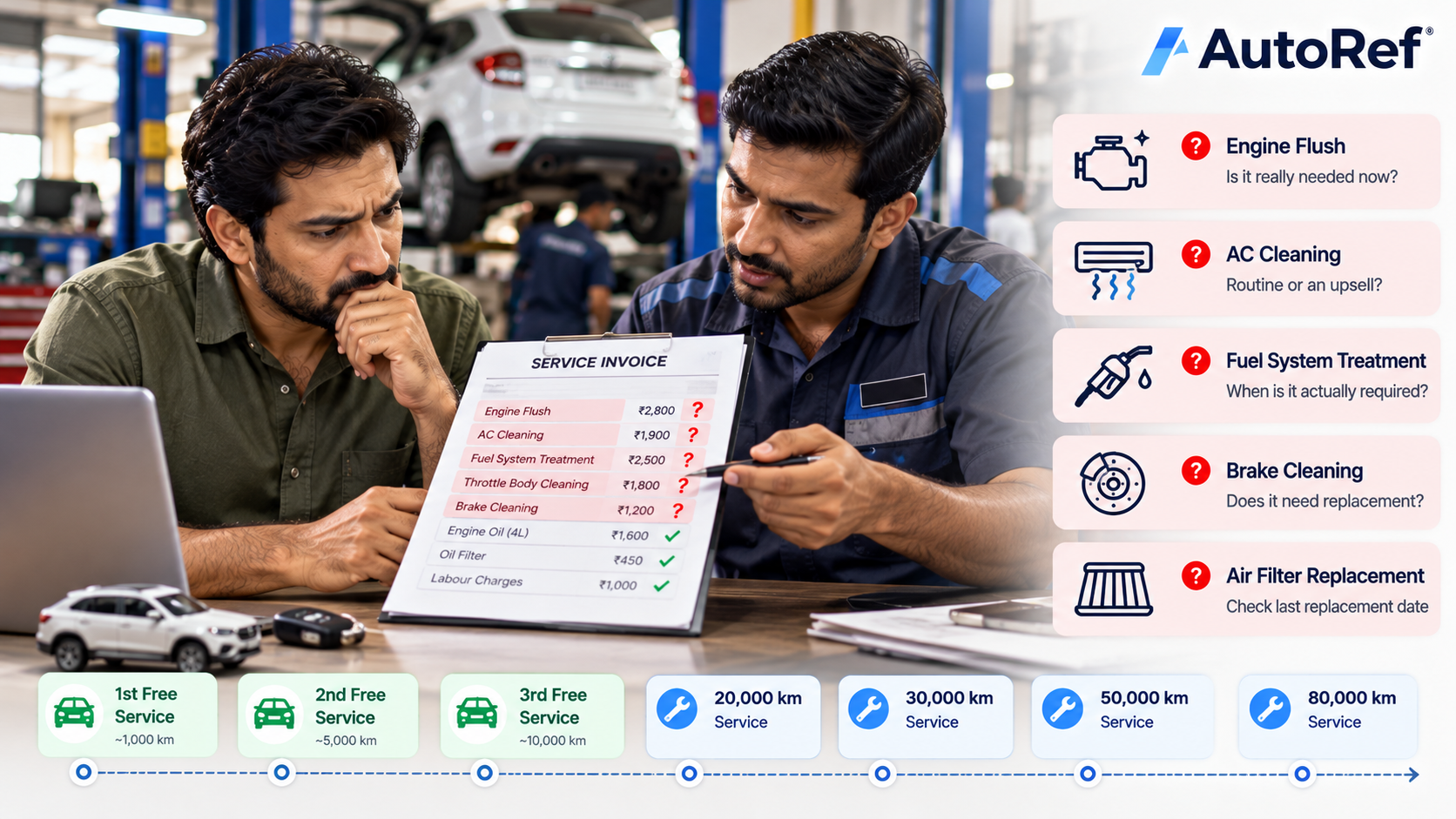
A service centre may recommend additional cleaning, inspection, replacement or treatment while your car is already in the workshop. Some recommendations are completely legitimate. Others may be optional, premature or dependent on the vehicle's actual condition.
The important question is not “Is this an upsell?” but:
“Why does my car need this work now?”
Your answer should come from the manufacturer's service schedule, vehicle mileage, previous maintenance and the actual condition of the part or system.
Free car services: what should you question?
Many new-car ownership plans include three scheduled services at little or no labour cost, although consumables may still be charged.
First free service
This is generally a basic inspection and scheduled maintenance visit.
Question additional recommendations such as:
- - Engine or fuel-system cleaning
- - AC cleaning treatments
- - Interior or exterior detailing
- - Engine flushes
- - Add-on protection treatments
- - Unscheduled part replacements
Ask whether the item is part of the scheduled service or an optional recommendation.
Second free service
By this point, some additional wear-related work may become relevant, but it still needs evidence.
Question:
- - Brake cleaning or replacement
- - Wheel alignment or balancing
- - Battery-related work
- - AC treatments
- - Air/fuel-system cleaning
- - Preventive replacement of components without symptoms
A recommendation becomes more credible when the service advisor can show measured wear, inspection results or a manufacturer's replacement interval.
Third free service
This is where your previous service history becomes particularly useful.
Before approving additional work, check:
- - Was the component replaced recently?
- - Was it already inspected at the previous service?
- - Is replacement actually due by mileage or time?
- - Is there a current symptom or measured problem?
Your previous invoices can be more useful than a verbal recommendation alone.
Paid services from 10,000 to 80,000 km
Service requirements become more varied as the vehicle ages and mileage increases. Across major passenger-car manufacturers, the exact schedule differs, so use the manufacturer's maintenance schedule as the baseline.
10,000–20,000 km
Question early recommendations for:
- - Fuel-system cleaning
- - Throttle-body cleaning
- - AC sanitisation
- - Engine flushes
- - Premature brake or suspension replacement
- - Add-on lubrication or treatment packages
Some may be useful under specific conditions, but they should not automatically be treated as mandatory.
30,000–40,000 km
At these intervals, wear-related work becomes more plausible.
Look carefully at:
- - Brake pads
- - Air and cabin filters
- - Tyres
- - Battery condition
- - Wheel alignment
- - Suspension components
- - Belts and other scheduled items
The key question is whether the work is due, worn or simply recommended.
50,000–60,000 km
This is often a more significant maintenance period.
Question recommendations involving:
- - Brake components
- - Suspension parts
- - Battery replacement
- - AC repairs
- - Cooling-system components
- - Major cleaning treatments
- - Belts, fluids or other mileage-related replacements
Ask for the inspection finding and compare it with previous invoices.
70,000–80,000 km
Higher-mileage vehicles naturally require more attention, but higher mileage should not become a reason to replace everything.
Pay particular attention to:
- - Repeated repairs
- - Major suspension work
- - Clutch-related recommendations
- - Cooling-system repairs
- - AC repairs
- - Fluid replacements
- - Components that were replaced earlier than expected
A replacement recommendation should ideally have a clear reason: wear, failure, leakage, measured condition or scheduled replacement.
The three questions to ask before approving an upsell
For almost any additional item on a car service invoice, ask:
1. Is it scheduled?
Is this item actually part of the manufacturer's service schedule for the current mileage?
2. What evidence shows I need it?
Ask for inspection findings, measurements, visible damage, leakage, wear or a diagnostic result.
3. When was it done last?
Check your service history before approving repeat work.
This is especially important for cleaning treatments, alignments, consumables and components that may have been replaced recently.
Your previous maintenance can prevent unnecessary work
Suppose your last invoice shows that a cabin filter, brake pads or battery was replaced recently. At the next service, the same item appears again.
That does not automatically mean the workshop is wrong. It means you have a reason to ask:
“Why is this required again?”
A service history gives you context that a single invoice cannot.
What about “recommended” versus “required”?
This distinction matters.
A service center may identify something that is worth considering even though it is not immediately necessary. For example, a component may show early wear but still have usable life.
A good service decision therefore separates:
Required now → Monitor → Optional → Not supported by current evidence
That is more useful than treating every recommendation as either genuine or fraudulent.
How AutoRef helps you question service upsells
AutoRef lets you keep your car service records, previous invoices, parts, labour and maintenance history together.
When you upload a service invoice, AutoRef can analyse the listed parts and labour in the context of the available vehicle and service information. This helps you identify items that may need confirmation or justification, including potentially repeated or questionable charges.
A flagged item is not automatically proof that the workshop overcharged you. It is a signal telling you what deserves a closer look before you approve or accept the bill.
Conclusion
The safest way to handle car service upsells is not to reject everything beyond the basic service. Instead, question anything that is unexpected, repeated, unscheduled or insufficiently explained.
From the first free service to 80,000 km, keep your service history, compare recommendations with the scheduled maintenance requirements and ask what evidence supports additional work.
Your service invoice should tell you what was done, why it was done and what you paid for.
Frequently Asked Questions
Can AutoRef identify unnecessary car service charges?
AutoRef can analyse service invoices and flag items that may require confirmation or justification. A flagged item is not automatically considered unnecessary.
Can AutoRef compare my current service bill with previous services?
Yes. Keeping previous invoices and service records helps provide context when reviewing repeated parts, labour and other charges.
Can AutoRef analyse free-service invoices?
Yes. You can upload invoices from free or paid services and review the listed parts and labour.
Can AutoRef help with services from 10,000 to 80,000 km?
Yes. AutoRef can retain the service and invoice history across different mileage intervals, allowing you to review what has already been done before the next service.
Does AutoRef support different car manufacturers?
Yes. AutoRef is designed around the vehicle's service and invoice information rather than being limited to one manufacturer.
Can I use AutoRef for just one car?
Yes. AutoRef supports individual car owners who want to keep their vehicle's maintenance and service invoices in one place.
Related Articles
All Vehicle Compliance →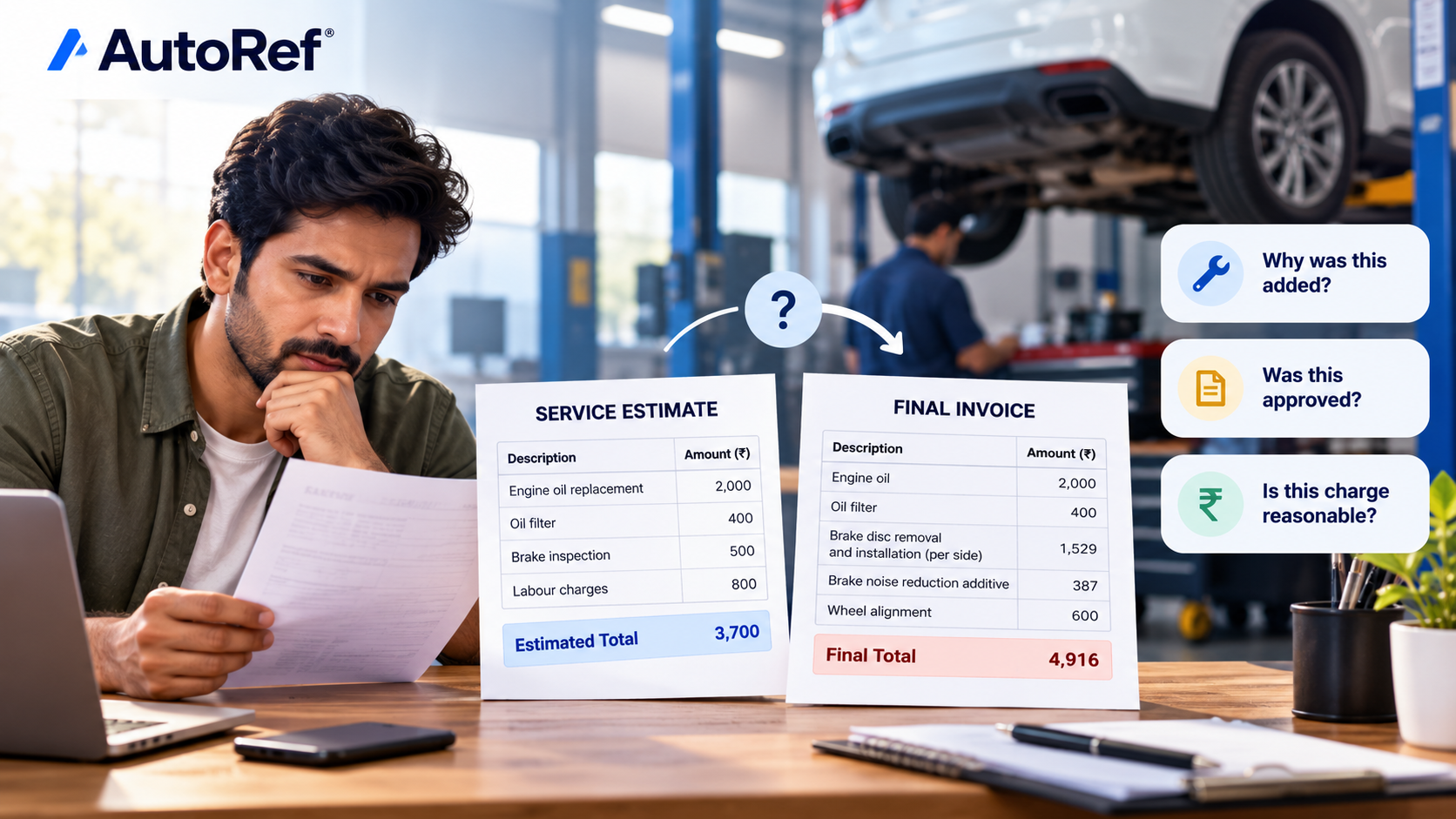 Vehicle Compliance
Car Service Estimate vs Final Invoice: What Should You Check?
Compare your car service estimate with the final invoice. Learn to check added parts, labour, unexplained charges, and how AutoRef helps you question them.
 Vehicle Compliance
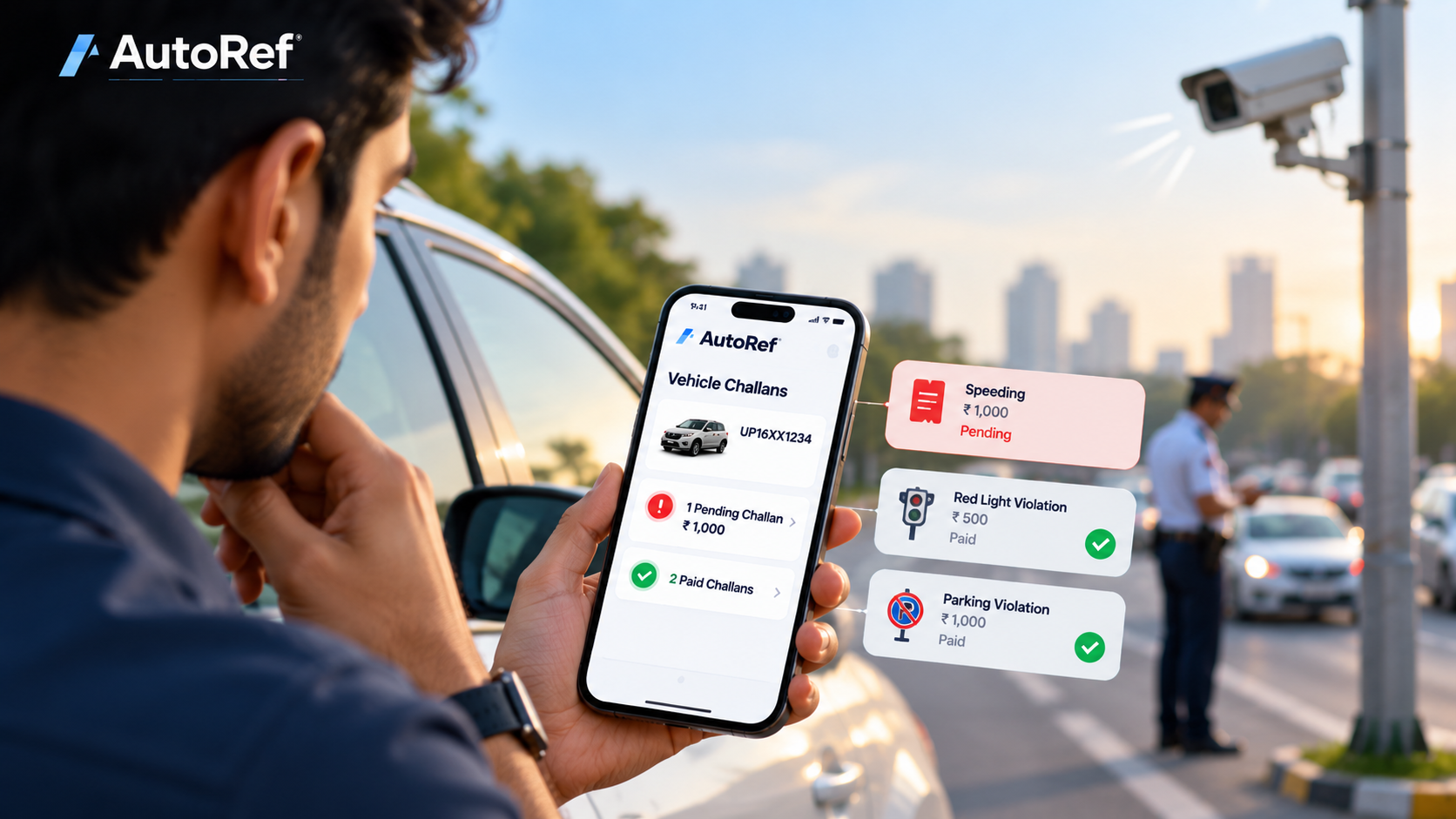
How to Check Vehicle Challans Online
Learn how to check vehicle challans online, understand common offences, pay pending challans safely and track challans across multiple vehicles.
 Vehicle Compliance
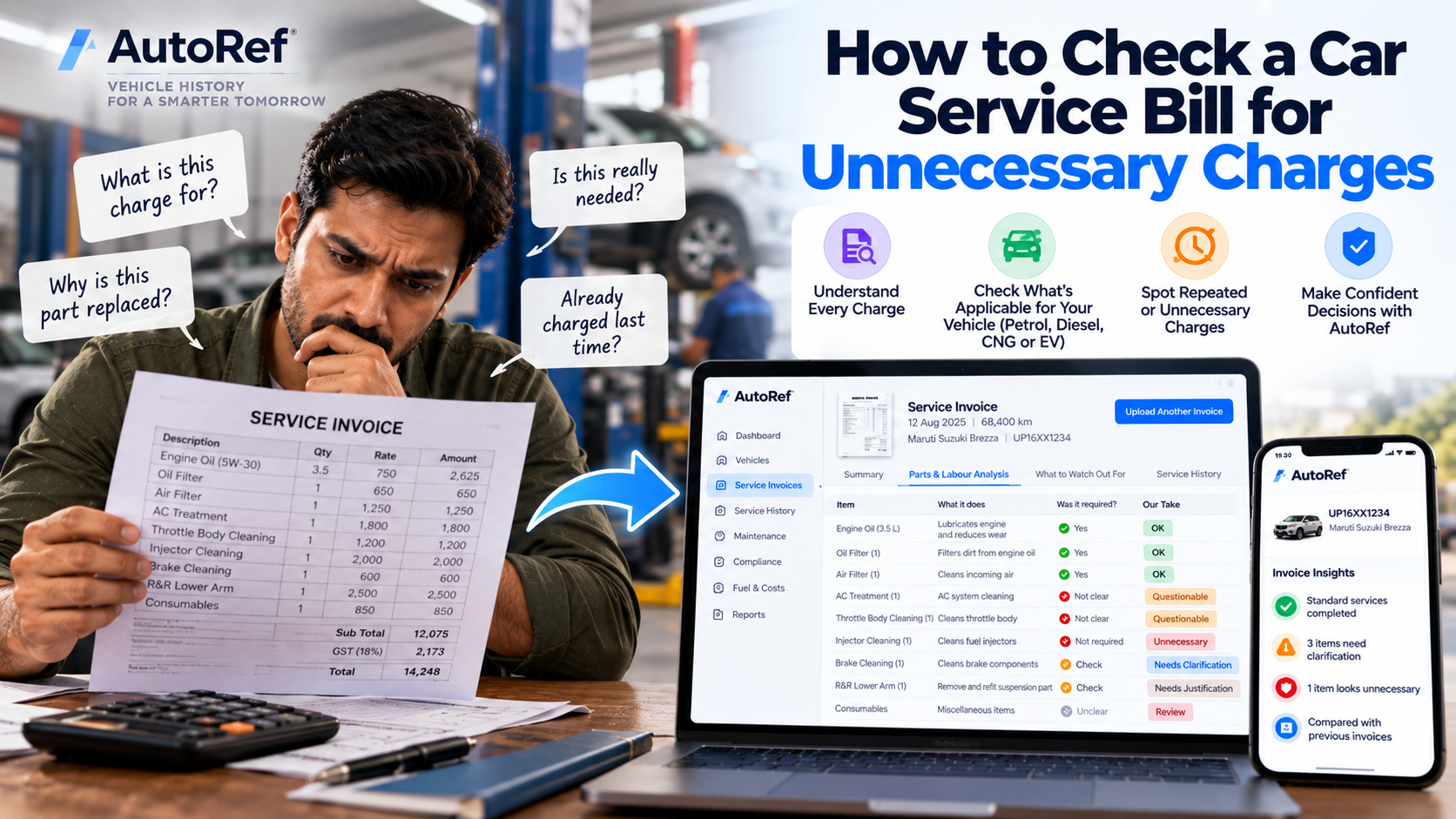
How to Check a Car Service Bill for Unnecessary Charges
Learn how to check a car service bill, understand technical charges, spot repeated items and use service history before approving repairs.