
Introduction
A car service estimate helps you understand the expected cost before work begins, but the final car service bill can be higher than the amount you approved. Additional labour, replacement parts, consumables, and repair recommendations can all increase the total. The important question is whether these changes were necessary, clearly explained, and approved before the garage carried out the work.
If you are comparing a car service estimate vs the final invoice, start by checking the difference in total cost, the parts and labour added, and any charges you do not recognise. A higher bill does not automatically mean you have been overcharged. However, unexplained additions deserve clarification.
This guide uses a practical invoice example to show what to check and how AutoRef helps you understand the charges.
1. Compare the estimate with the final car service bill
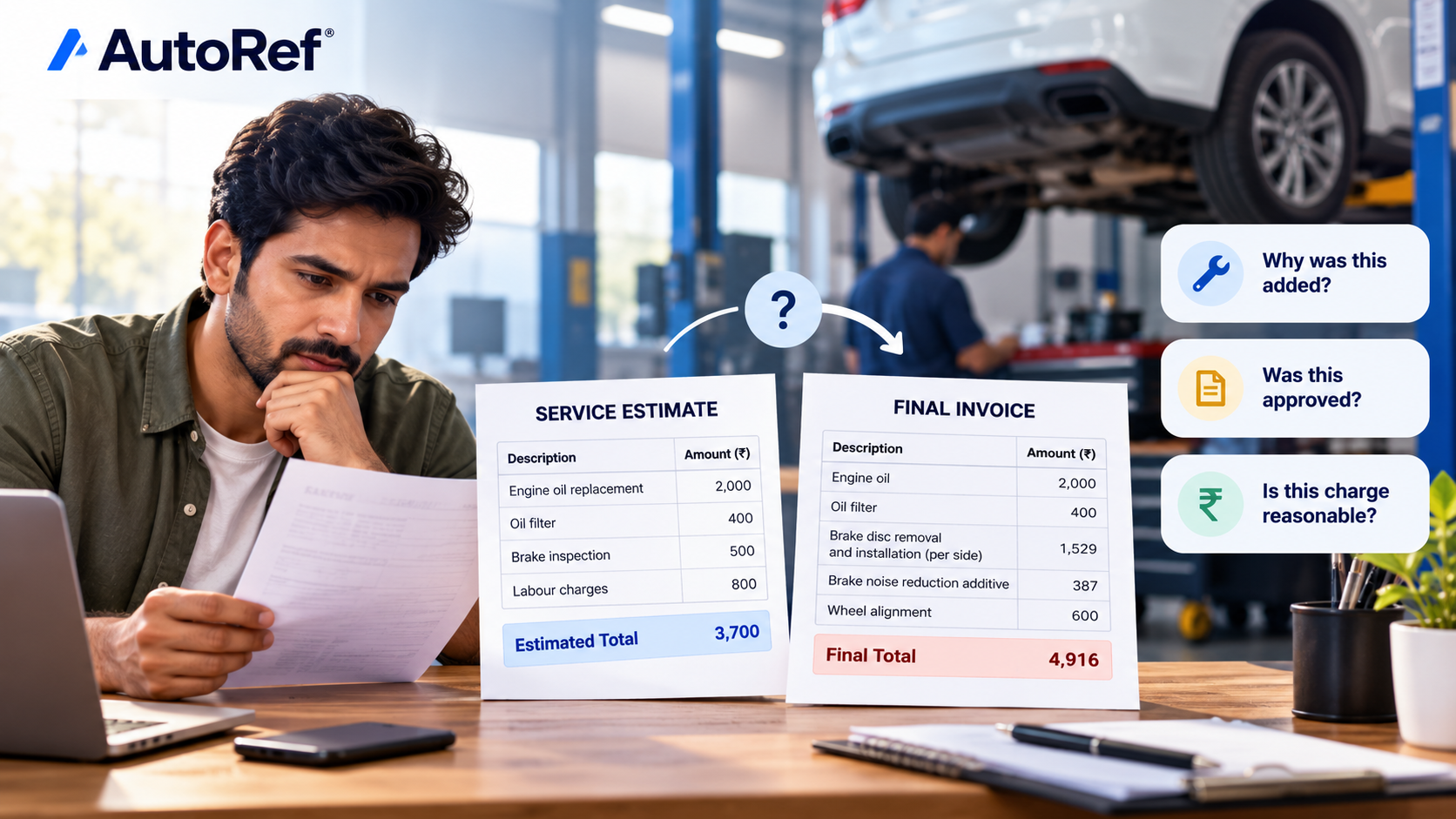
Consider this illustrative example. A garage initially estimates a service at ₹3,700, but the final invoice totals ₹4,916.
| Service item | Approved estimate | Final invoice |
|---|---|---|
| Engine oil / replacement | ₹2,000 | ₹2,000 |
| Oil filter | ₹400 | ₹400 |
| Brake inspection | ₹500 | - |
| Labour charges | ₹800 | - |
| Brake disc removal and installation (per side) | - | ₹1,529 |
| Brake noise reduction additive | - | ₹387 |
| Wheel alignment | - | ₹600 |
| Total | ₹3,700 | ₹4,916 |
Illustrative figures for this article, not a market-price benchmark. The brake disc labour figure is rounded from two sides at ₹764.64 per side.
The final invoice is ₹1,216 higher than the estimate i.e. an increase of approximately 32.9%.
That difference is worth investigating, but it does not prove the garage did anything wrong. The brake work and wheel alignment may have been justified. What matters is whether the garage explained the additional work and obtained your approval.
Ask these questions:
- Which items were added after the estimate was prepared?
- What problem did each additional item address?
- Did the garage contact you and obtain approval before proceeding?
- Does the final invoice clearly separate parts, labour, and consumables?
2. Check additional parts and labour separately
An estimate can change because a mechanic discovers another issue after inspecting the vehicle. The final bill should make those changes understandable.
Check parts: Look for new components, additives, fluids, filters, and other consumables. Ask why each item was required and whether it was included in a service package.
Check labour: Identify work that was not in the original estimate. For example, brake disc removal and installation may be legitimate labour, but you should be able to understand which wheels were worked on and whether any parts were replaced, reused, cleaned, or machined.
Check quantities and duplication: Confirm that quantities, per-side charges, and repeated labour operations make sense. The same task should not appear twice without a clear reason.
Check approval: If the garage recommended additional work, look for a revised estimate, message, call record, or other confirmation showing that you agreed to the extra cost.
A useful rule is to investigate unexplained differences rather than assume every additional charge is improper.
3. How AutoRef helps you understand your invoice
Reading a long service invoice line by line can be difficult, particularly when the description is unfamiliar or the garage uses technical terminology. AutoRef analyses the invoice and explains individual parts and labour items in context.
Instead of simply labelling the entire bill as good or bad, AutoRef highlights items that need different levels of attention.
Okay: Items that appear consistent with the available invoice and service context. This is not a guarantee that every charge is correct.
Confirmation required: Items where you should confirm the purpose, necessity, or approval. For example, an additive billed separately.
Questionable: Items with a specific inconsistency or reason to investigate further. This does not automatically mean the charge is fraudulent or invalid.
Justification required or Attention: Items that need a stronger explanation or closer review, depending on the issue identified.
AutoRef also explains why an item has been flagged. For instance, a brake disc removal and installation labour charge may be highlighted when the invoice does not clearly identify related parts or explain what was replaced or reused.
AutoRef gives you questions to ask the garage
The analysis goes beyond highlighting charges. It provides specific questions you can use when speaking to the service advisor, such as:
- What exactly was done under this brake disc removal and installation charge, and on which wheels?
- Which parts were replaced, and why are they not listed separately?
- Were the existing discs and pads reused after cleaning or machining?
- What problem was the brake noise reduction additive intended to solve?
- Was the additional item included in a package, or was it separately approved?
These questions turn an unclear invoice into a more informed conversation. You can ask the garage to explain the work before deciding whether to accept the charge.
4. What to do when your final invoice is higher
Before paying or when reviewing a bill you have already paid follow this checklist:
- Compare the final total with the approved estimate.
- Mark every new or changed part, labour operation, and consumable.
- Ask for the reason, quantity, and price of each unexplained addition.
- Check whether you approved the extra work.
Request a corrected or itemised invoice if a charge is duplicated or incorrectly described.
Keep the estimate, final invoice, and approval messages with your vehicle’s service history.
For example, a ₹1,216 increase may be reasonable if additional work was genuinely needed and approved. If the garage cannot explain an item, you have a concrete reason to request clarification rather than arguing about the total alone.
Conclusion
Comparing a car service estimate with the final invoice is not just about finding the difference in rupees. It is about understanding what changed, why the work was done, and whether the additional expense was approved.
AutoRef helps make that review easier by explaining invoice items, distinguishing what appears okay from what needs confirmation or is questionable, and suggesting specific questions to ask the garage. A flagged item is a prompt to investigate, not an automatic verdict against the service centre.
Review your next service invoice with more clarity
Upload your car service invoice to AutoRef to understand the parts and labour charged, identify items that need confirmation or closer review, and get specific questions to ask your garage.
Frequently Asked Questions
Why is my final car service bill higher than the estimate?
The garage may have found additional problems, added parts or labour, or recommended extra services. Ask for an itemised explanation and confirmation of when the additional work was approved.
Does a higher final invoice mean I was overcharged?
No. Additional work may be legitimate. Compare the estimate and invoice, then verify the purpose, quantity, price, and approval for each new item.
Can AutoRef tell me which charges to question?
AutoRef analyses invoice items and highlights those that appear okay, need confirmation, or may be questionable. It explains the reasons and provides questions you can ask the garage. The result is guidance for review, not a definitive finding of wrongdoing.
What documents should I keep after servicing my car?
AutoRef stores your final itemised service invoice in digitised form, so you can refer back to the parts, labour, and charges from each service visit. You should also keep your original service estimate, payment receipts, approval messages for additional work, and warranty documents for replaced parts. These records help you compare estimates with final bills, verify extra charges, and make informed decisions about future repairs.
Related Articles
All Vehicle Compliance →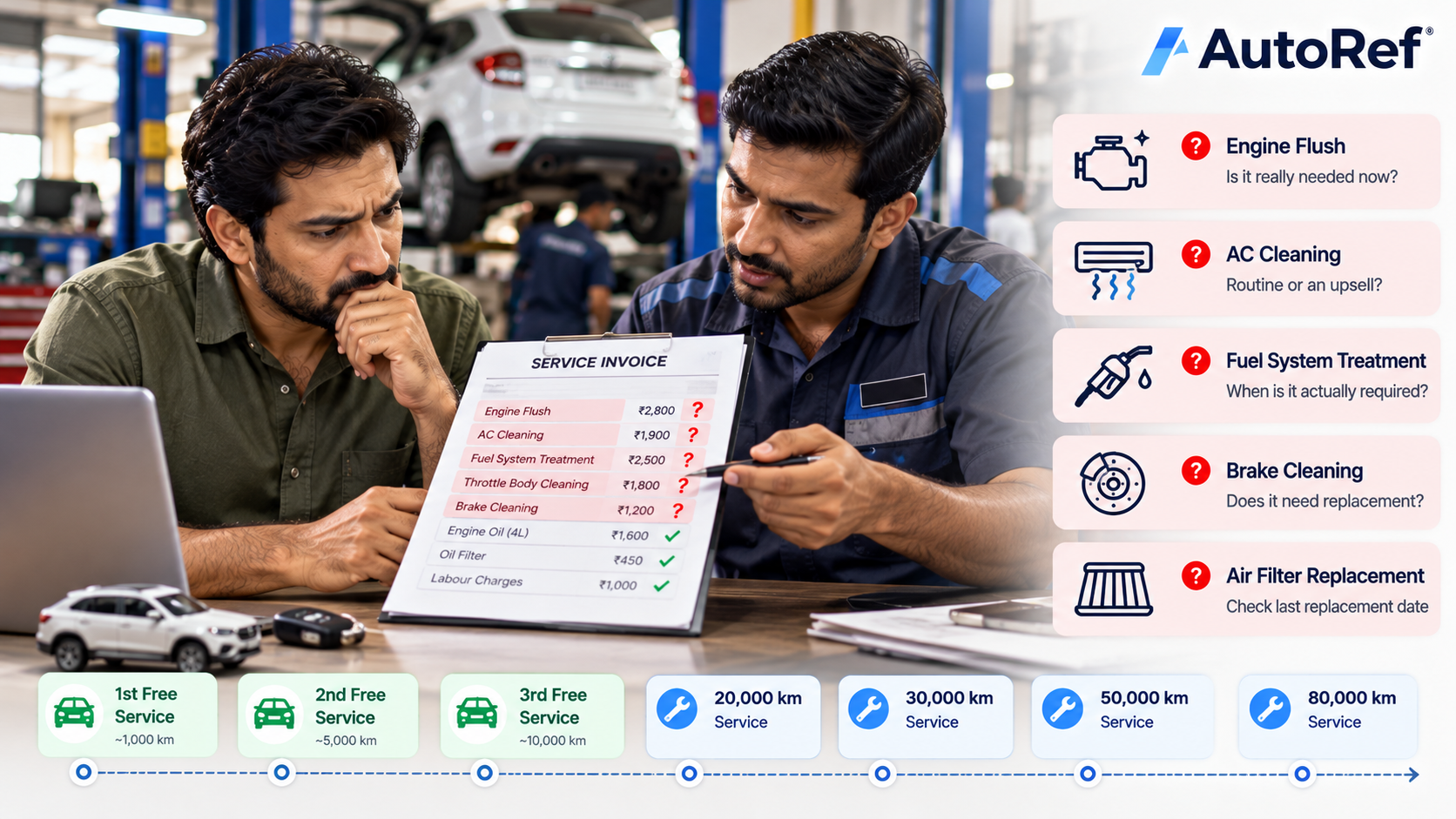 Vehicle Compliance
Common Car Service Upsells: What Should You Question?
Learn which car service upsells to question, from free services to 80,000 km, and how service history can help you review extra charges.
 Vehicle Compliance
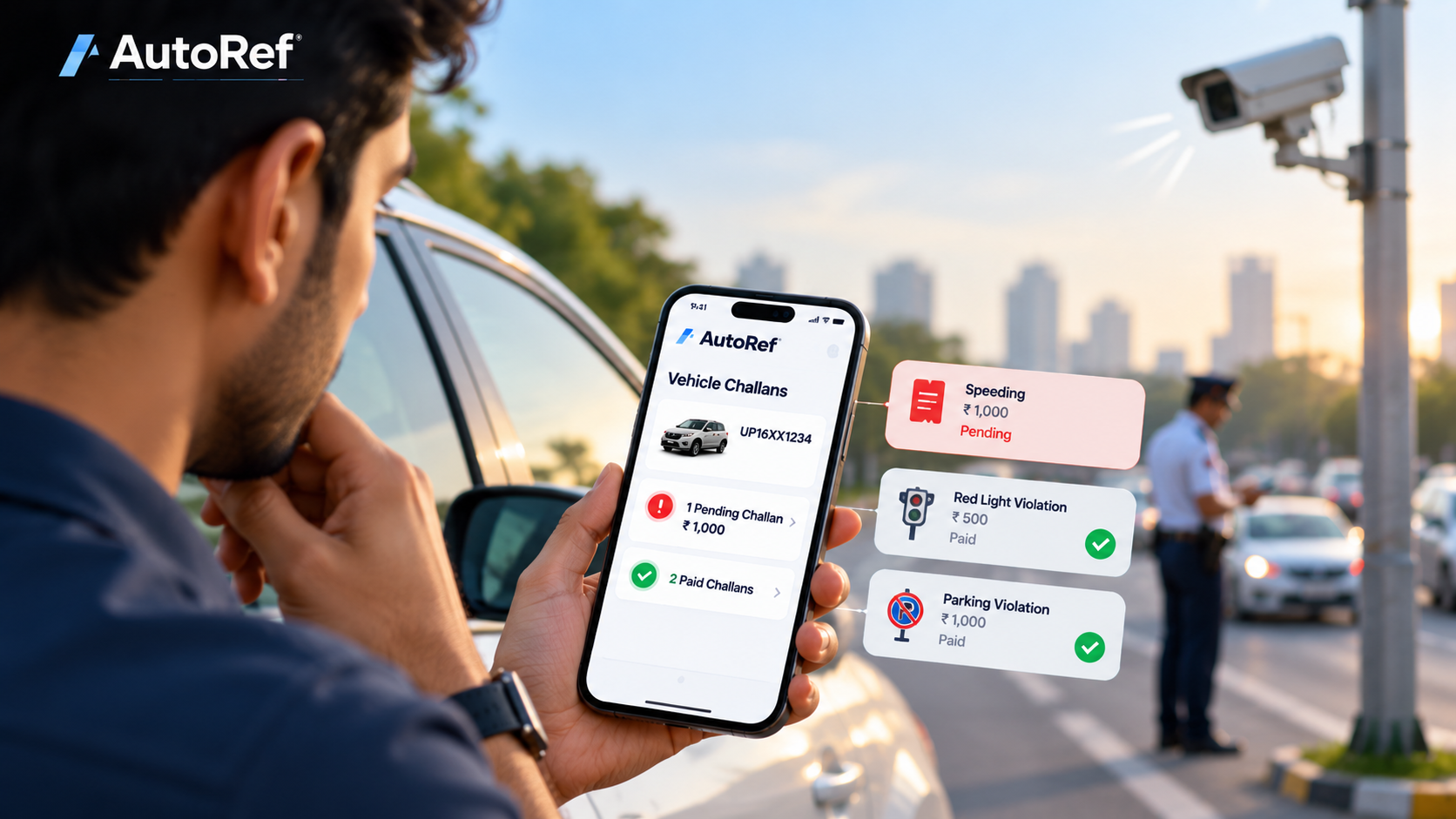
How to Check Vehicle Challans Online
Learn how to check vehicle challans online, understand common offences, pay pending challans safely and track challans across multiple vehicles.
 Vehicle Compliance
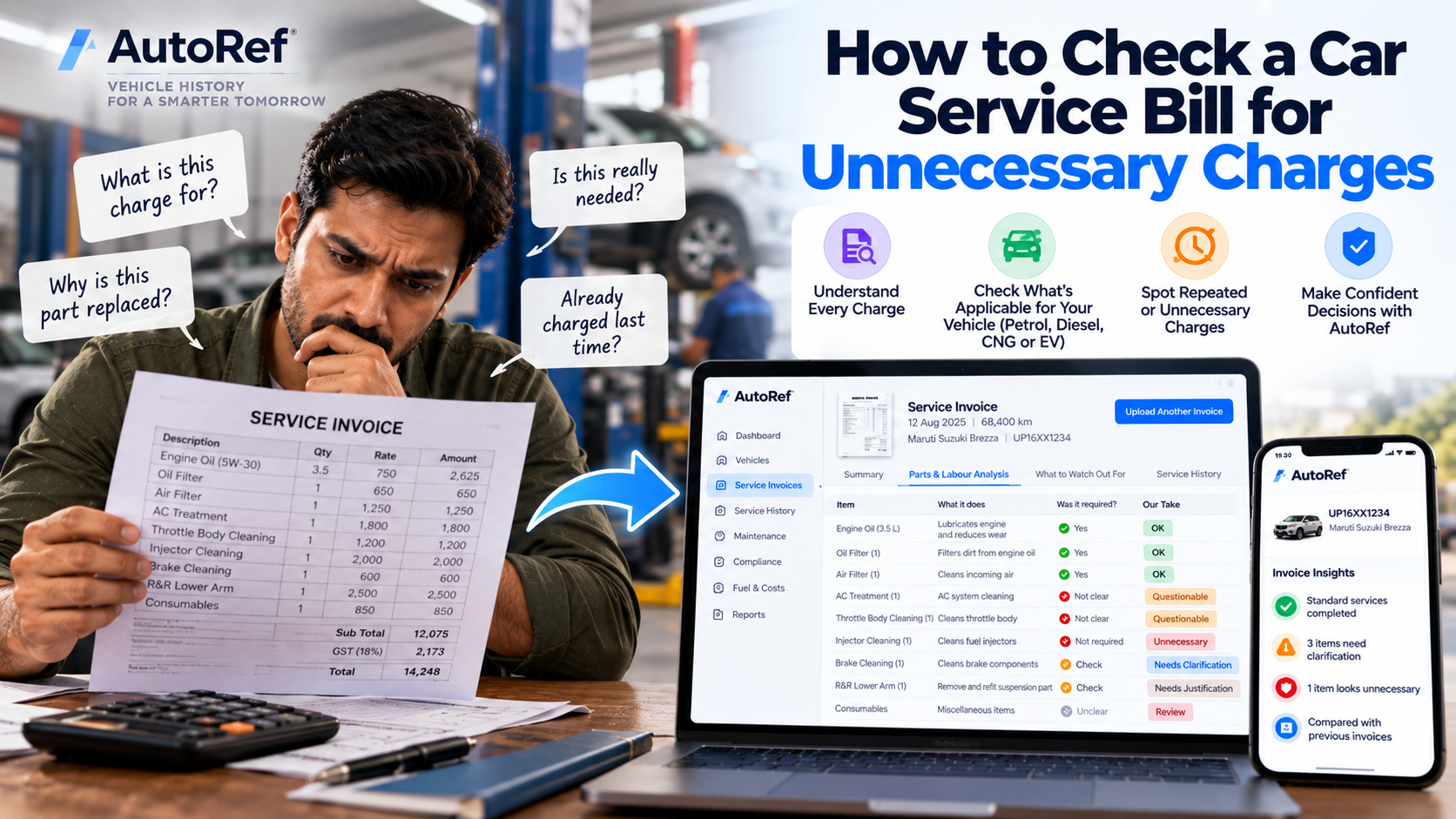
How to Check a Car Service Bill for Unnecessary Charges
Learn how to check a car service bill, understand technical charges, spot repeated items and use service history before approving repairs.