Introduction
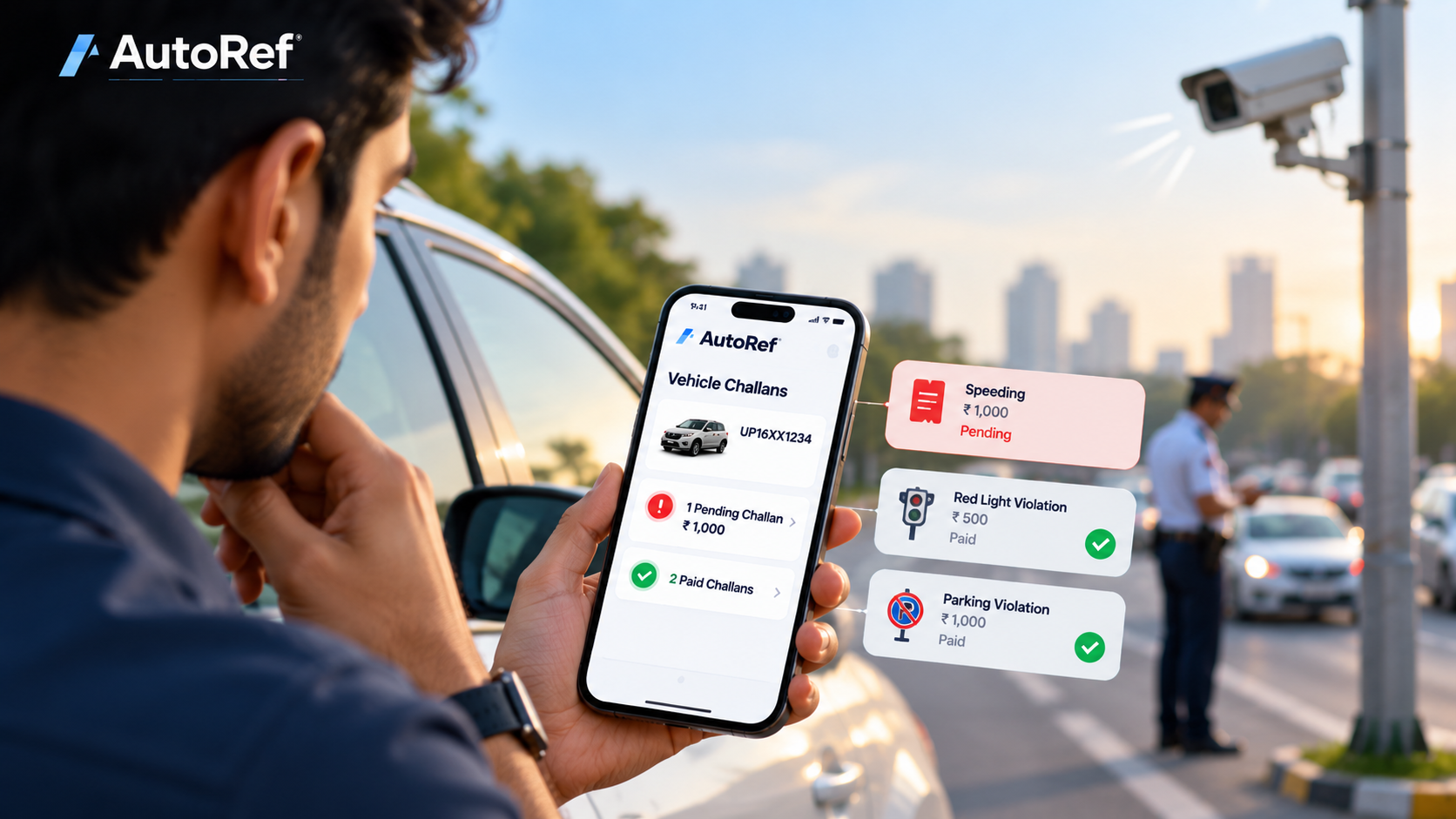
A vehicle challan can be easy to miss.
You may receive a message, forget about it, assume the driver will tell you, or simply not know that a traffic violation was recorded against your vehicle.
For an individual car owner, one unpaid challan may sit unnoticed for weeks. For a taxi operator, hotel fleet, ambulance operator or transport business with several vehicles, keeping track of every challan becomes considerably harder.
The good news is that vehicle challan status can be checked online through the official eChallan system operated by the Ministry of Road Transport & Highways (MoRTH). The official portal allows users to search using a challan number, vehicle number or, where applicable, driving-licence details.
How to Check a Vehicle Challan Online
The basic process is:
- 1. Open the official eChallan portal.
- 2. Select the challan-status option.
- 3. Enter your vehicle number, challan number or applicable DL details.
- 4. Complete the required verification.
- 5. Review the challan details.
- 6. If it is pending, proceed with the available payment option.
The official system can display information including the challan number, vehicle/RC number, challan date, amount, status, state, department and challan location. It can also show the offence details.
This is important because simply knowing that "there is a challan" does not tell you what it relates to.
Why Challans Can Be State-Specific
A vehicle does not necessarily receive all its challans in the state where it is registered.
Imagine a car registered in Uttar Pradesh travelling to Delhi, Haryana or Rajasthan.
A traffic violation can occur in another state, depending on where the vehicle is being operated and where enforcement takes place.
The official eChallan ecosystem has state-specific integrations and currently lists services covering numerous states and Union Territories. The official portal also identifies the state and challan location in the challan record.
This creates an important problem for people who regularly travel between states.
A UP-registered taxi operating in Delhi, for example, should not be assumed to have no pending challans simply because its owner has checked the vehicle locally.
Common Types of Vehicle Challans
The exact offences and penalties depend on the applicable law and jurisdiction, but common traffic violations can include:
- - Over speeding
- - Traffic light violations
- - Driving without required documents
- - Parking violations
- - Talking on a mobile phone while driving
- - Helmet or seat-belt violations
- - Overloading
- - Permit-related violations (for applicable commercial vehicles)
The official eChallan system records the applicable Act/section and offence details for a challan.
For a fleet owner, this information can also help identify whether violations are isolated incidents or recurring operational problems.
The Problem With Unpaid Challans
The biggest issue is often not deliberately avoiding payment.
It is simply forgetting.
Consider an individual owner who receives a ₹500 challan notification while travelling. They are busy, postpone payment and forget about it.
Three months later, they remember only when another vehicle-related task requires checking their documents.
The same problem becomes more complicated with a fleet.
A taxi owner with five vehicles may have:
- Vehicle A - no pending challan
- Vehicle B - ₹500 pending
- Vehicle C - two pending challans
- Vehicle D - driver says there is nothing pending
- Vehicle E - challan issued in another state
The owner now has to check each vehicle separately and potentially follow up with different drivers.
Why Fleet Challan Tracking Is Difficult
Fleet owners often rely heavily on drivers for information.
A driver may say:
"Sir, there was a challan, but I think it was paid."
The owner may not know:
- - Which challan?
- - How much?
- - When was it issued?
- - Which state issued it?
- - Was payment actually successful?
- - Was it paid through the official system?
- - Is another challan still pending?
The official portal provides payment verification and transaction information, including the ability to verify successful payment and download payment receipts.
That makes verification important rather than relying only on verbal confirmation.
How to Pay a Vehicle Challan Online
After checking the pending challan, the official eChallan system provides an online payment flow for eligible challans. The portal can require verification through the registered mobile number or other supported authentication methods.
After payment, retain the transaction details and verify that the payment has been recorded successfully.
The official portal specifically warns users about fraudulent websites and apps impersonating eChallan services. Use the official eChallan website rather than payment links received through unknown messages.
There is another important situation: some challans may have been forwarded to Virtual Court. The official portal warns users not to pay the same challan twice, if it has already been paid through Virtual Court, it should not be paid again on eChallan, and vice versa.
How AutoRef Can Help With Fleet Compliance
Checking one vehicle occasionally is relatively easy.
Checking five, ten or twenty vehicles repeatedly is a different problem.
AutoRef's vehicle-level compliance approach allows owners to keep challans alongside other vehicle information, such as:
- - RC
- - Insurance
- - PUC
- - Permits
This gives the owner a single vehicle-level view instead of relying on separate messages, spreadsheets and driver updates.
For example:
| Vehicle | Pending Challans | Other Compliance |
|---|---|---|
| UP16 XX 1234 | 0 | All current |
| UP16 XX 5678 | 1 | Insurance due soon |
| UP16 XX 9012 | 2 | Permit needs attention |
The objective is not simply to collect challan information. It is to make the owner aware that this particular vehicle needs attention.
Don't Treat Challan Tracking as a One-Time Task
For an individual car, checking periodically can prevent an old challan from being forgotten.
For a fleet, it should become part of the regular vehicle-compliance process.
The owner should be able to ask:
- Which vehicles have pending challans?
- Where were they issued?
- How much is outstanding?
- Has the payment actually been completed?
- Which vehicles need follow-up with their drivers?
That visibility becomes more important as the number of vehicles increases.
Conclusion
Knowing how to check a vehicle challan online is only the first step. The bigger challenge is remembering to check every vehicle and making sure that a payment has actually been completed.
For individual owners, an overlooked challan can become an unnecessary administrative problem. For taxi operators, hotel vehicles, ambulances and transport fleets, multiple vehicles and different drivers make the problem harder.
The official eChallan system provides the tools to check challan status, view offence details and make or verify eligible payments.
AutoRef adds the vehicle-level organisation around that information, helping owners keep challans alongside RC, insurance, PUC and permit records.
The objective is simple: know which vehicle has an outstanding compliance issue before it becomes a bigger problem.
Frequently Asked Questions
Can AutoRef help track challans for multiple vehicles?
AutoRef's vehicle-level compliance approach allows owners to maintain challan information alongside RC, insurance, PUC and permit information. This is particularly useful when multiple vehicles are operated by different drivers.
Can I pay a vehicle challan online?
Eligible pending challans can be paid through the official eChallan payment flow. After payment, verify the transaction status and retain the receipt. If the challan has been forwarded to Virtual Court, follow the portal's instructions and avoid paying the same challan twice.
Can a vehicle registered in one state have a challan from another state?
Yes. A vehicle can be issued a challan where a traffic violation occurs, even if the vehicle is registered in another state. The official challan record identifies the state and location associated with the challan.
How can I check my vehicle challan online?
You can use the official MoRTH eChallan portal and search using your vehicle number, challan number or supported driving-licence details. The system can show the challan amount, date, state, department, location and offence details.
Related Articles
All Vehicle Compliance →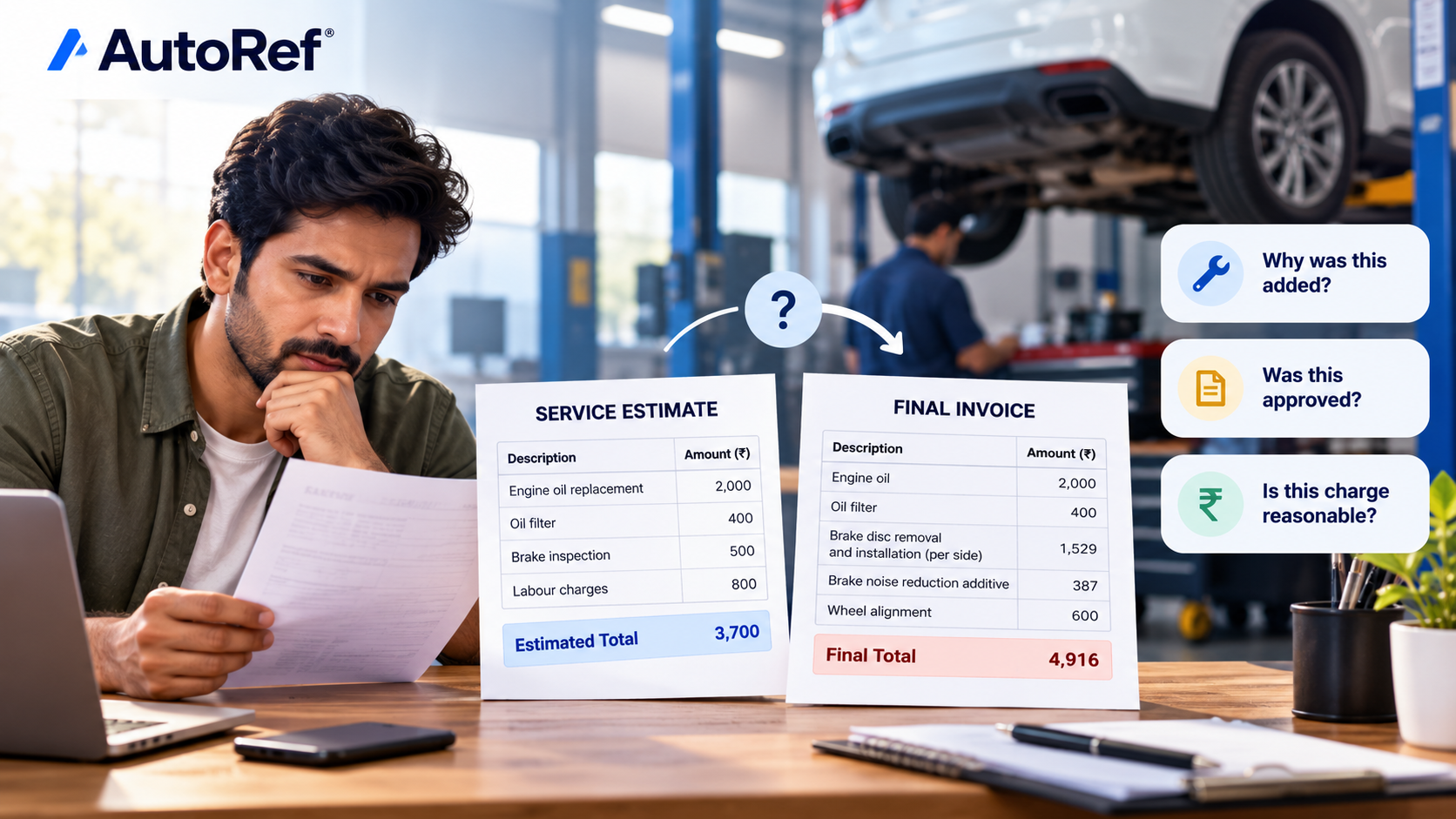 Vehicle Compliance
Car Service Estimate vs Final Invoice: What Should You Check?
Compare your car service estimate with the final invoice. Learn to check added parts, labour, unexplained charges, and how AutoRef helps you question them.
 Vehicle Compliance
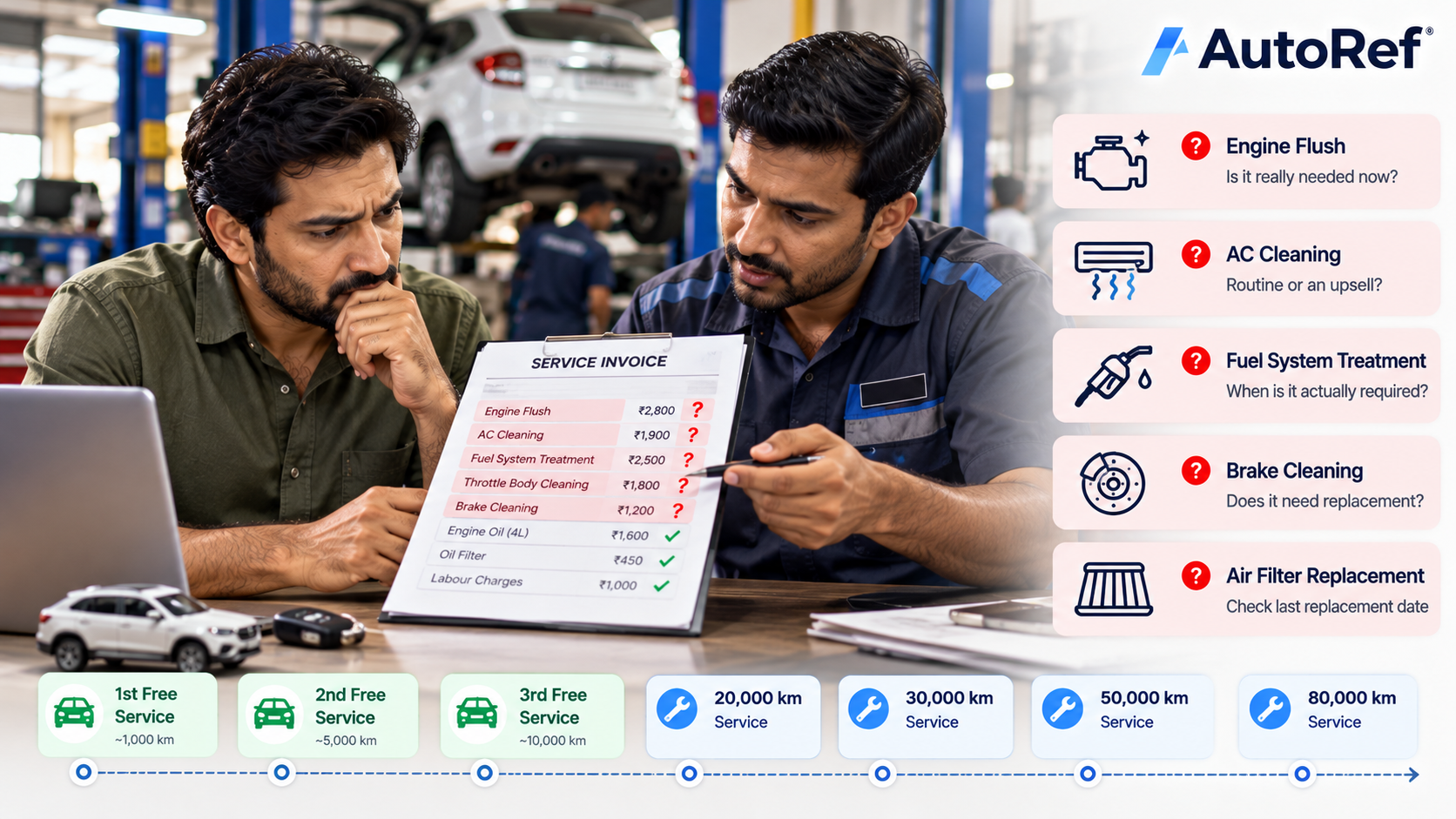
Common Car Service Upsells: What Should You Question?
Learn which car service upsells to question, from free services to 80,000 km, and how service history can help you review extra charges.
 Vehicle Compliance
How to Check a Car Service Bill for Unnecessary Charges
Learn how to check a car service bill, understand technical charges, spot repeated items and use service history before approving repairs.