

Introduction
Vehicle maintenance generally falls into two approaches: preventive maintenance, where servicing and inspections are planned before problems occur, and reactive maintenance, where a vehicle is repaired after a fault or failure is identified.
For fleet operators, the choice is not simply about maintenance costs. A vehicle that is unavailable for several days can affect operations, customer commitments, revenue, and fleet utilisation.
So, which approach works better? In most fleet operations, preventive maintenance provides greater control, while reactive maintenance remains necessary for unexpected failures.
What Is Preventive Maintenance?
Preventive maintenance is one part of a broader fleet preventive maintenance program involves servicing, inspecting, and replacing components according to planned triggers such as:
- - Time
- - Mileage
- - Vehicle usage
- - Manufacturer recommendations
- - Vehicle condition
- - Previous maintenance history
For example, a fleet operator may schedule servicing before a vehicle reaches its recommended mileage interval rather than waiting for a component or system to fail.
The objective is to identify maintenance requirements early and plan the work around vehicle availability.
What Is Reactive Maintenance?
Reactive maintenance occurs after a vehicle develops a problem or experiences a failure.
Examples include:
- - Repairing a vehicle after a breakdown
- - Replacing a failed battery
- - Fixing a warning-related mechanical issue
- - Addressing a component that has already failed
Reactive maintenance is unavoidable to some extent. Even well-maintained vehicles can experience unexpected failures. The problem arises when reactive maintenance becomes the primary maintenance strategy.
Preventive vs Reactive Maintenance: Key Differences
| Factor | Preventive Maintenance | Reactive Maintenance |
|---|---|---|
| Timing | Planned before failure | After a problem occurs |
| Downtime | Can usually be scheduled | Often unexpected |
| Cost planning | More predictable | More difficult to predict |
| Vehicle availability | Easier to manage | Can be disrupted |
| Maintenance history | Builds structured records | Often focused on immediate repair |
| Operational risk | Generally easier to control | Higher potential for disruption |
Which Approach Works Better for Fleets?
For most fleets, preventive maintenance should form the foundation of the maintenance strategy.
A taxi fleet, for example, may have vehicles operating for long hours and accumulating significant mileage. Waiting for failures can create unplanned downtime at times when the vehicle is needed for operations.
Corporate fleets may have more flexibility, but unexpected repairs can still disrupt employee transportation or scheduled activities. Self-drive rental operators face another challenge: an unavailable vehicle can directly affect rental availability.
Preventive maintenance allows operators to plan service around vehicle utilisation and operational requirements.
However, preventive maintenance does not eliminate reactive repairs. Vehicles still encounter unexpected problems, accidents, and failures that require immediate attention.
The Best Approach: Preventive First, Reactive When Necessary
The practical goal is not to eliminate reactive maintenance completely. It is to reduce avoidable reactive maintenance.
A strong maintenance process combines planned servicing and inspections with accurate records of unexpected repairs. Recording every repair against the relevant vehicle makes it easier to build a complete vehicle maintenance history and identify recurring issues to determine whether a vehicle requires additional attention.
As fleets grow, centralised vehicle records can help operators maintain this history and understand what has happened to each vehicle over time.
AutoRef can help fleet owners bring service and repair information into a vehicle-level record, making it easier to track maintenance history and use that information when planning future maintenance.
Own a car rather than a fleet?
The same principle applies to individual vehicles. Keeping service and repair history in one place makes it easier to understand what has already been done and what may be due next.
Conclusion
Preventive maintenance generally provides greater predictability and control for fleet operators, while reactive maintenance remains an unavoidable part of vehicle ownership.
The objective should therefore be to plan what can be planned, monitor vehicle condition, maintain accurate history, and respond quickly when unexpected problems occur.
A centralized system providing vehicle maintenance intelligence can help fleet operators connect service history, repairs, parts and maintenance activity for each vehicle.
Frequently Asked Questions
Is preventive maintenance better than reactive maintenance?
For most fleets, preventive maintenance is preferable because it allows servicing to be planned and can reduce avoidable breakdowns and unexpected downtime.
Can a fleet operate entirely on preventive maintenance?
No. Preventive maintenance can reduce some unexpected failures, but it cannot eliminate breakdowns, accidents, or sudden component failures.
How can fleet operators reduce reactive maintenance?
Regular inspections, timely servicing, appropriate maintenance triggers, and accurate vehicle maintenance history can help identify issues earlier and reduce avoidable reactive repairs.
Related Articles
All Fleet Maintenance Management →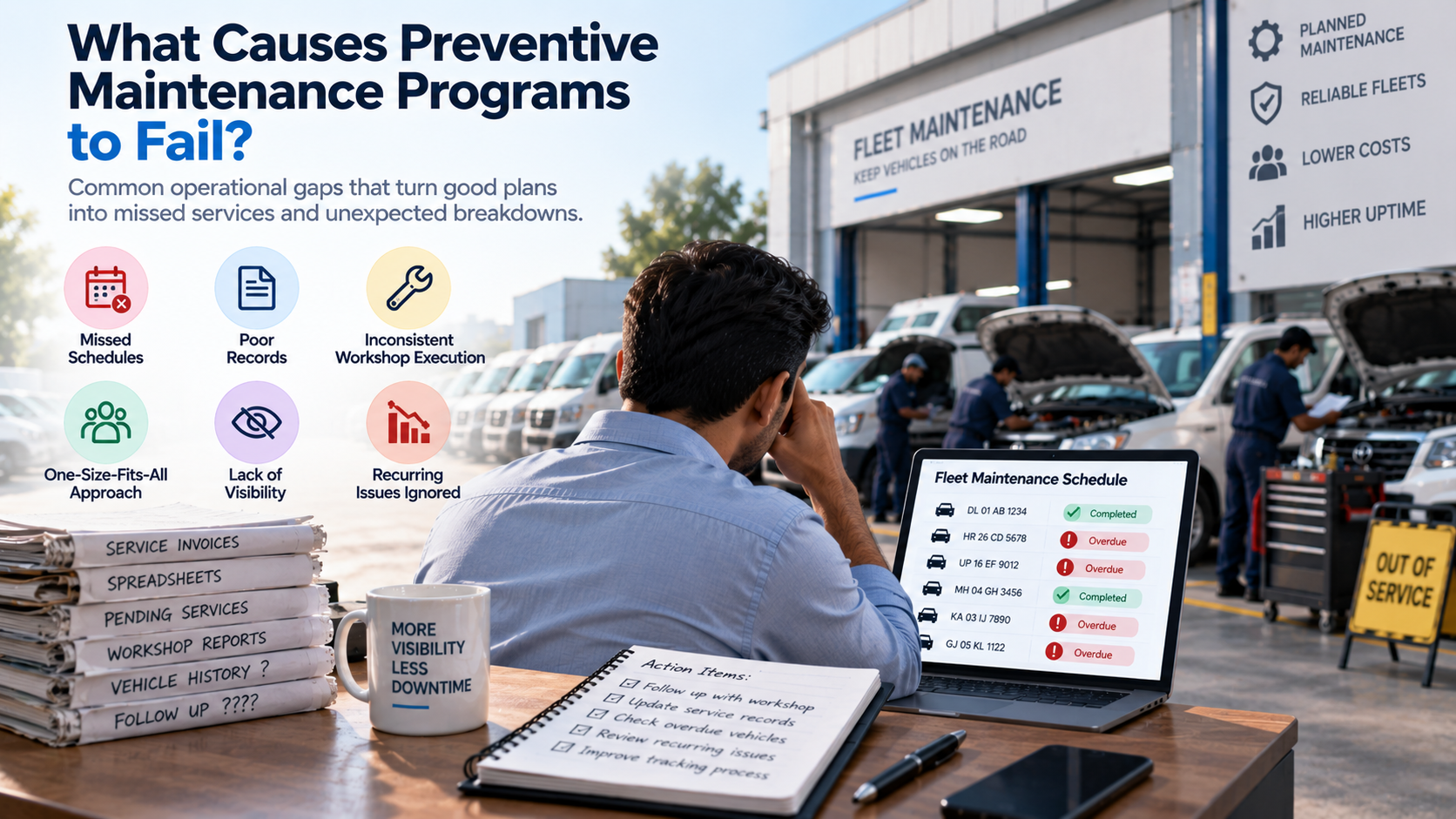 Fleet Maintenance Management
What Causes Preventive Maintenance Programs to Fail?
What Causes Preventive Maintenance Programs to Fail?
 Fleet Maintenance Management
10 Essential Tasks for a Fleet Preventive Maintenance Checklist
Use this fleet preventive maintenance checklist to track 10 essential tasks covering tyres, fluids, brakes, batteries, servicing, and vehicle history.
 Fleet Maintenance Management
How Often Should Fleet Vehicles Be Serviced?
Set fleet service intervals using mileage, usage, conditions, age and repair history not just the calendar. Build schedules per vehicle for reliability.