
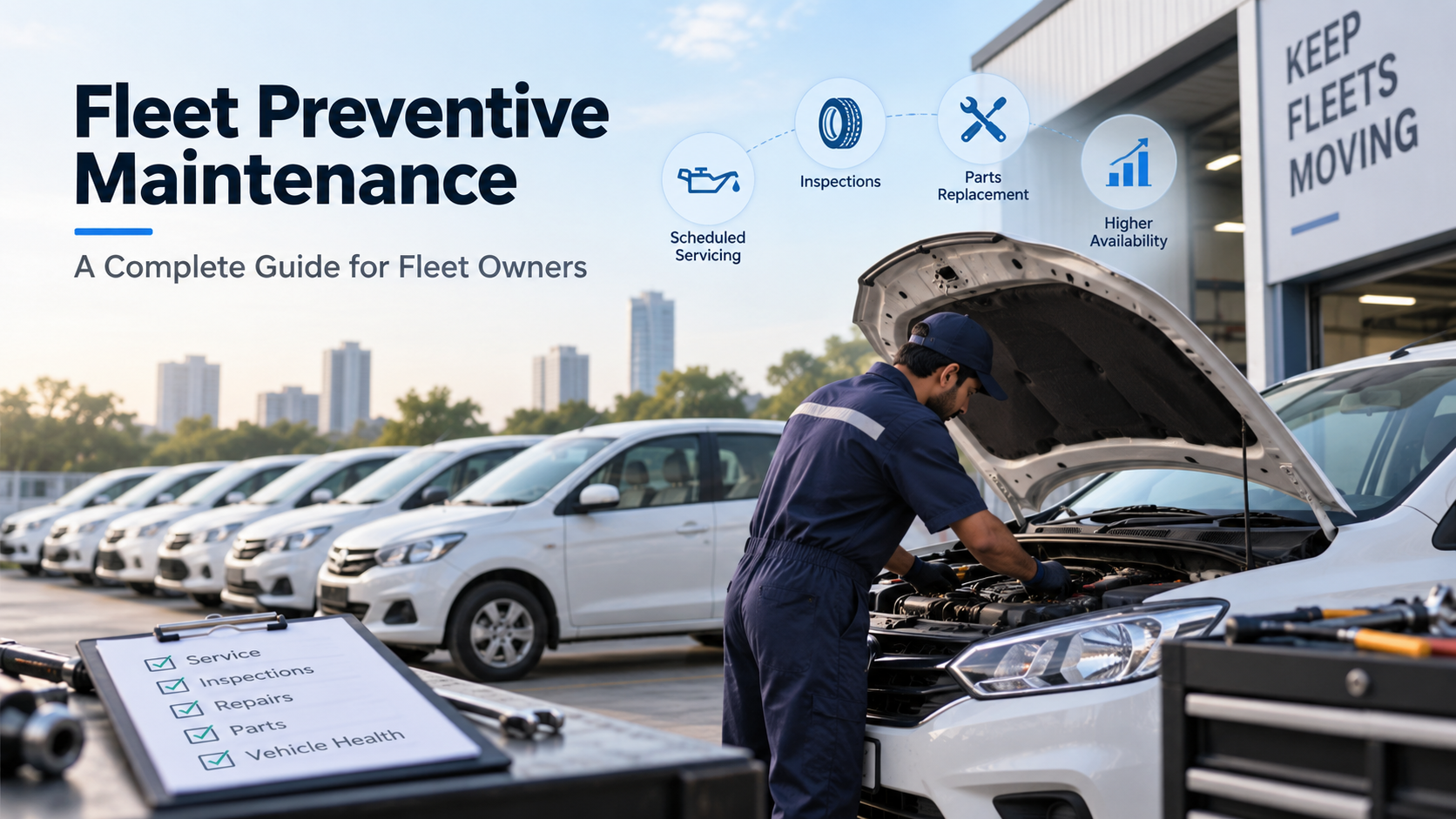
Introduction
For fleet owners, vehicle maintenance is not simply about sending vehicles for periodic servicing. It is about knowing what maintenance each vehicle needs, when it needs it, what work has already been completed, and whether its maintenance history should change future decisions.
Without a structured approach, fleets often end up reacting to breakdowns, relying on scattered invoices and spreadsheets, or discovering maintenance issues only when they affect vehicle availability.
Fleet preventive maintenance provides a system for managing this process proactively.
What Is Fleet Preventive Maintenance?
Fleet preventive maintenance is the planned inspection, servicing, and maintenance of vehicles before issues result in failures or major repairs.
Maintenance activities can be triggered by time, mileage, vehicle usage, manufacturer recommendations, or the vehicle's actual condition.
The objective is not simply to service every vehicle on a fixed schedule. It is to create a structured process for deciding what maintenance each vehicle needs, when it should happen, and how its previous service and repair history should influence future decisions.
Why Is Preventive Maintenance Important for Fleets?
Unexpected vehicle failures can create problems beyond the repair itself.
For corporate fleets, taxis, and self-drive rental businesses, downtime can affect daily operations and vehicle availability. Emergency repairs may also cost more and provide less opportunity for planning.
A structured preventive maintenance process can help fleets:
- Reduce unexpected breakdowns
- Improve vehicle availability
- Identify issues before they become larger repairs
- Plan maintenance around operations
- Maintain clearer records of vehicle costs and repairs
- Understand recurring maintenance issues
- The value increases as the fleet grows because maintenance information becomes harder to track manually.
Preventive vs Reactive Fleet Maintenance
Preventive maintenance involves planned servicing, inspections, and component checks before a failure occurs.
Reactive maintenance happens after a vehicle develops a problem or breaks down.
Reactive maintenance cannot be eliminated entirely. Vehicles can still suffer unexpected failures. However, relying primarily on reactive maintenance means fleet owners are constantly responding to problems rather than managing vehicle condition systematically.
A preventive approach creates historical data that also makes reactive decisions more informed. Knowing what was previously repaired or replaced can provide important context when diagnosing a new issue.
What Should a Fleet Preventive Maintenance Program Include?
Scheduled Servicing
Vehicles should follow maintenance schedules based on manufacturer recommendations and their actual operating patterns.
Regular Inspections
Routine checks can identify issues involving tyres, brakes, fluids, batteries, lights, suspension, and other critical components between scheduled services.
Maintenance and Repair History
Each completed service, repair, and part replacement should be recorded against the individual vehicle. This creates a historical record rather than treating every workshop visit as an isolated event.
Component Monitoring
Components such as tyres, batteries, and frequently replaced parts may require separate tracking to understand replacement patterns and recurring costs.
Common Fleet Maintenance Triggers
Maintenance does not need to depend on a single fixed interval. Common triggers include:
Time
A vehicle may require servicing or inspection after a specific number of weeks or months.
Mileage
Maintenance can be scheduled when a vehicle reaches a defined kilometre threshold.
Usage
High-utilisation vehicles may require more frequent attention than vehicles that travel occasionally.
Vehicle Condition
Inspection findings, warning indicators, unusual performance, or recurring issues may trigger maintenance outside the normal schedule.
How to Build a Fleet Preventive Maintenance Process
Step 1 - Create a Vehicle Baseline: Record each vehicle's make, model, age, current mileage, and available maintenance history.
Step 2 - Categorise Vehicles by Usage: Group vehicles based on utilisation and operating patterns instead of applying identical schedules to every vehicle.
Step 3 - Define Maintenance Triggers: Establish time-, mileage-, usage-, or condition-based triggers.
Step 4 - Create a Maintenance Schedule: Convert these triggers into planned inspections and service requirements.
Step 5 - Track Completed Work: Record what was serviced, repaired, or replaced against the relevant vehicle.
Step 6 - Review Maintenance History: Look for recurring repairs, high-cost vehicles, and unusual replacement patterns.
Step 7 - Adjust the Program: Update maintenance requirements based on actual vehicle performance and historical patterns.
The Challenge of Managing Maintenance Across a Growing Fleet
A process that works for five vehicles can become unreliable when a fleet expands across multiple vehicles, drivers, locations, and service providers.
Fleet owners need a consolidated view of which vehicles require attention and what has previously happened to each one. Without this, maintenance decisions often depend on manually searching through invoices, spreadsheets, workshop records, and conversations.
When Manual Maintenance Tracking Stops Being Enough
Manual tracking becomes increasingly difficult when maintenance records are fragmented or when fleet managers can no longer easily answer basic questions about an individual vehicle's history.
This is where a centralized vehicle record system becomes relevant.
AutoRef provides a vehicle-level view of maintenance information, helping fleet owners maintain service and repair records, track completed work, and use historical information when making future maintenance decisions.
The role of such a system is not to replace a preventive maintenance program. It is to provide the record-keeping and visibility needed to manage that program consistently as the fleet grows.
Conclusion
Fleet preventive maintenance is a system for deciding what maintenance each vehicle needs, when it should happen, and how the resulting service and repair history should influence future decisions.
For fleet owners, the process should combine planned servicing, inspections, appropriate maintenance triggers, and accurate vehicle-level records.
As operations grow, maintaining this information manually becomes harder. A centralized system such as AutoRef can help bring a vehicle's maintenance and repair history into one place, providing the context needed to manage preventive maintenance with greater consistency and control.
Frequently Asked Questions
What is fleet preventive maintenance?
Fleet preventive maintenance is the planned servicing, inspection, and monitoring of vehicles to address maintenance needs before they result in breakdowns or larger repairs.
What is the difference between preventive and reactive fleet maintenance?
Preventive maintenance is planned before a failure occurs, while reactive maintenance involves repairing a vehicle after a problem or breakdown has already occurred.
What triggers fleet preventive maintenance?
Common triggers include time intervals, mileage, vehicle usage, manufacturer recommendations, inspection findings, and changes in vehicle condition.
What records should fleet owners maintain?
Fleet owners should track service dates, mileage, repairs, parts replaced, inspection findings, maintenance costs, and the history of work completed for each vehicle.
Why is vehicle-level maintenance history important?
Vehicle-level history provides context for future maintenance decisions. It can help identify recurring problems, understand previous repairs, monitor replacement patterns, and avoid treating every maintenance event in isolation.
Related Articles
All Fleet Maintenance Management →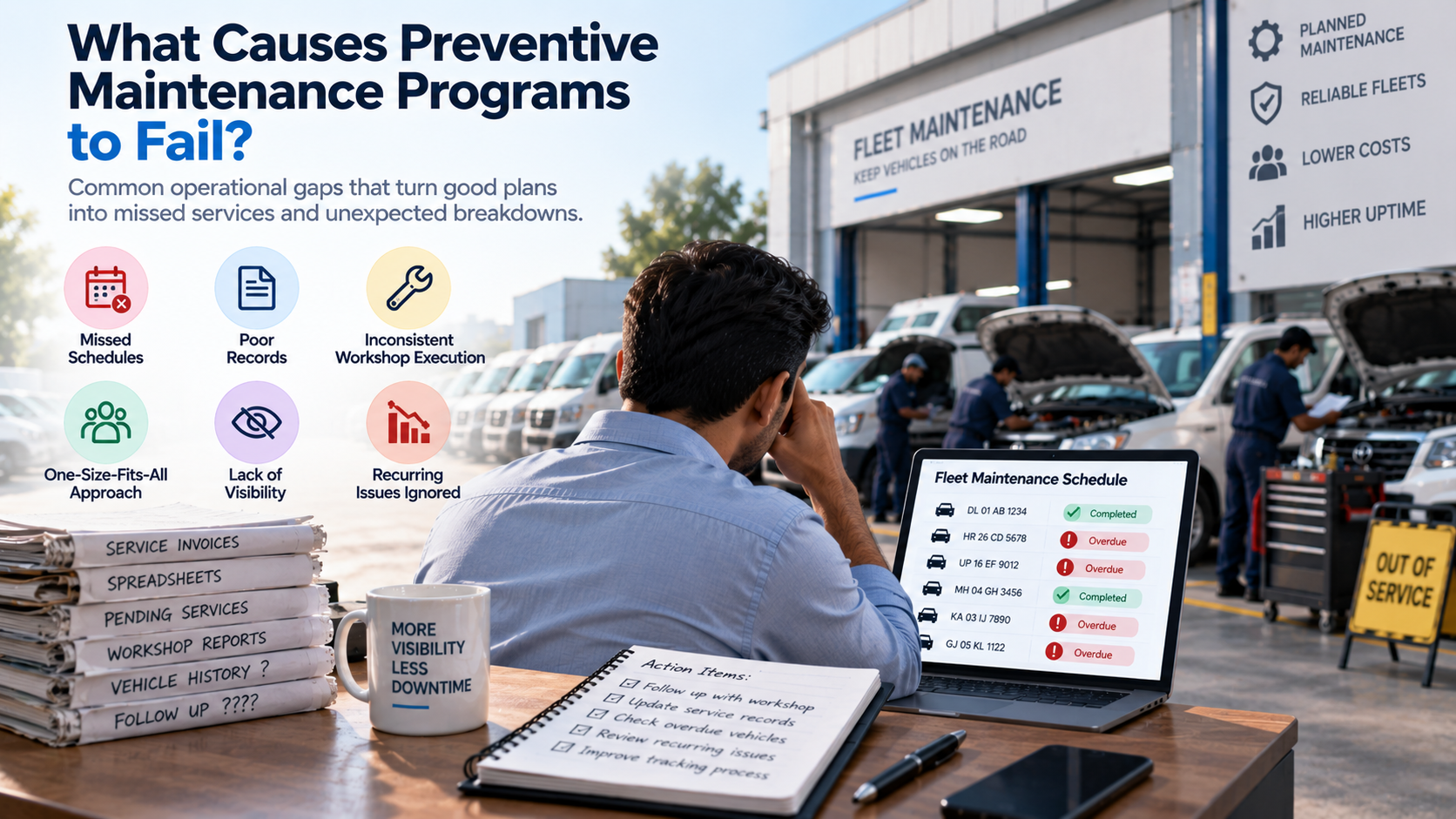 Fleet Maintenance Management
What Causes Preventive Maintenance Programs to Fail?
What Causes Preventive Maintenance Programs to Fail?
 Fleet Maintenance Management
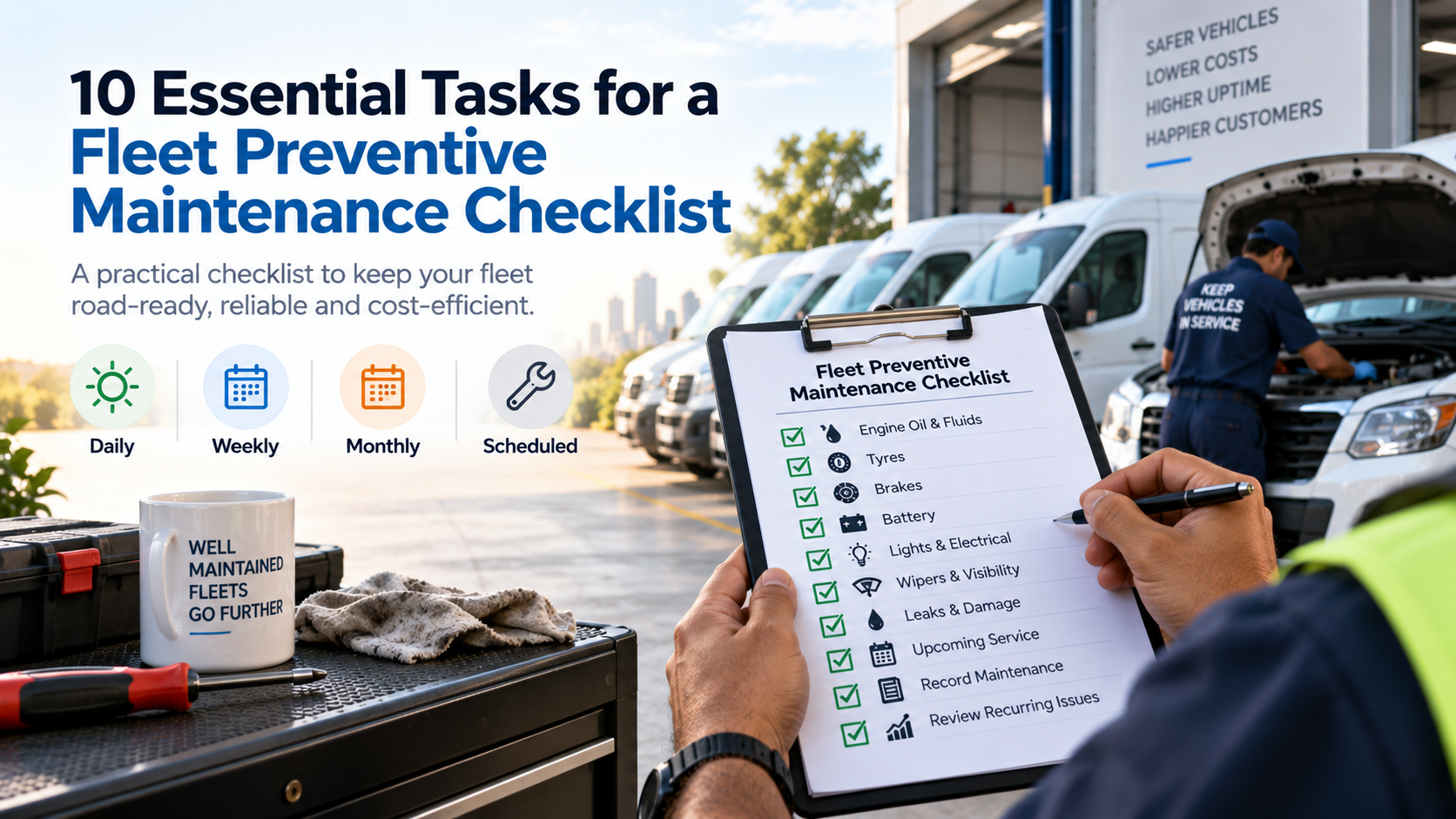
10 Essential Tasks for a Fleet Preventive Maintenance Checklist
Use this fleet preventive maintenance checklist to track 10 essential tasks covering tyres, fluids, brakes, batteries, servicing, and vehicle history.
 Fleet Maintenance Management
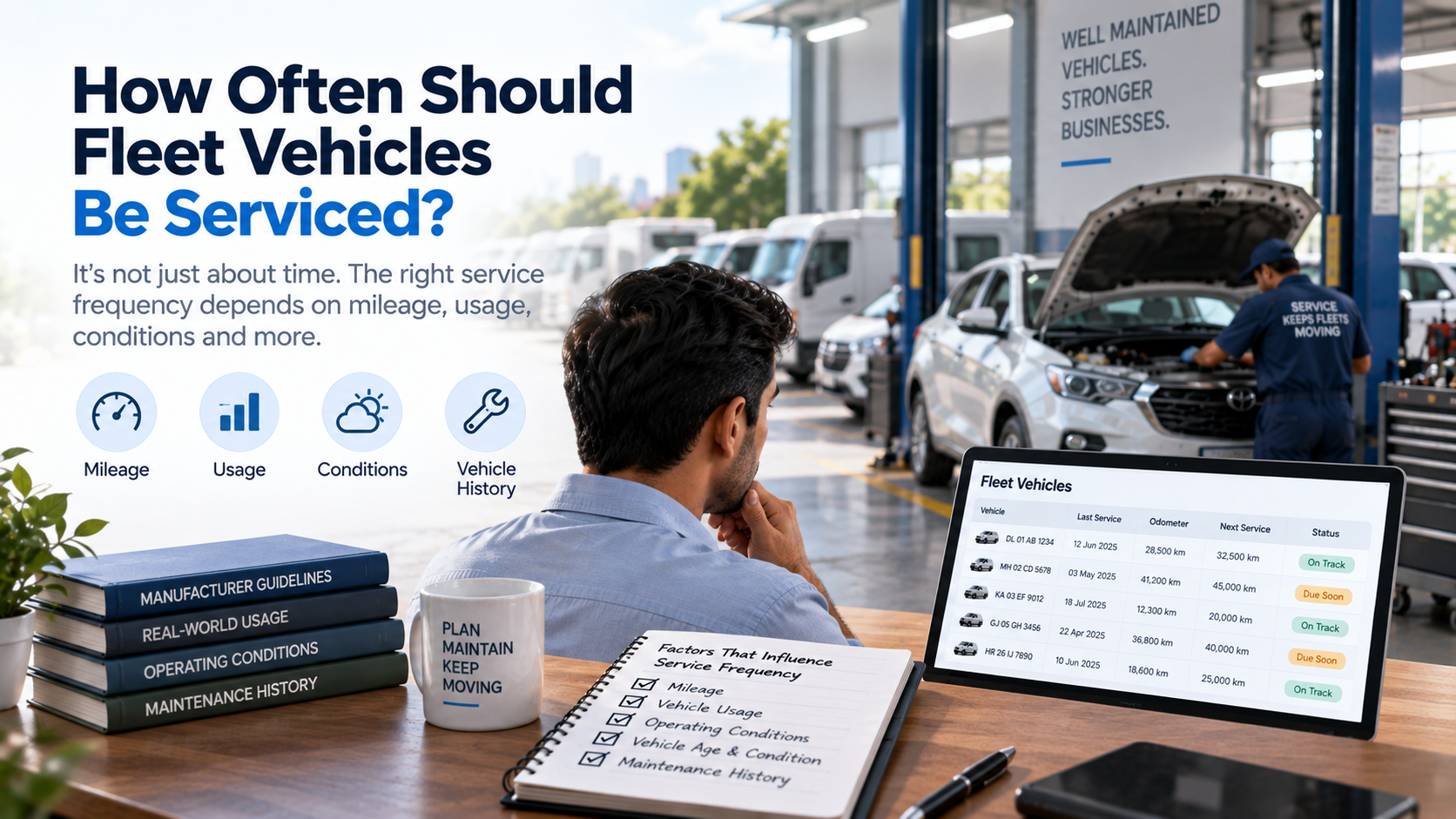
How Often Should Fleet Vehicles Be Serviced?
Set fleet service intervals using mileage, usage, conditions, age and repair history not just the calendar. Build schedules per vehicle for reliability.