
Introduction
A fleet can have a maintenance schedule, a preventive maintenance checklist and regular service appointments, yet still experience frequent breakdowns and unexpected repairs.
That raises an important question: Is the maintenance program actually working?
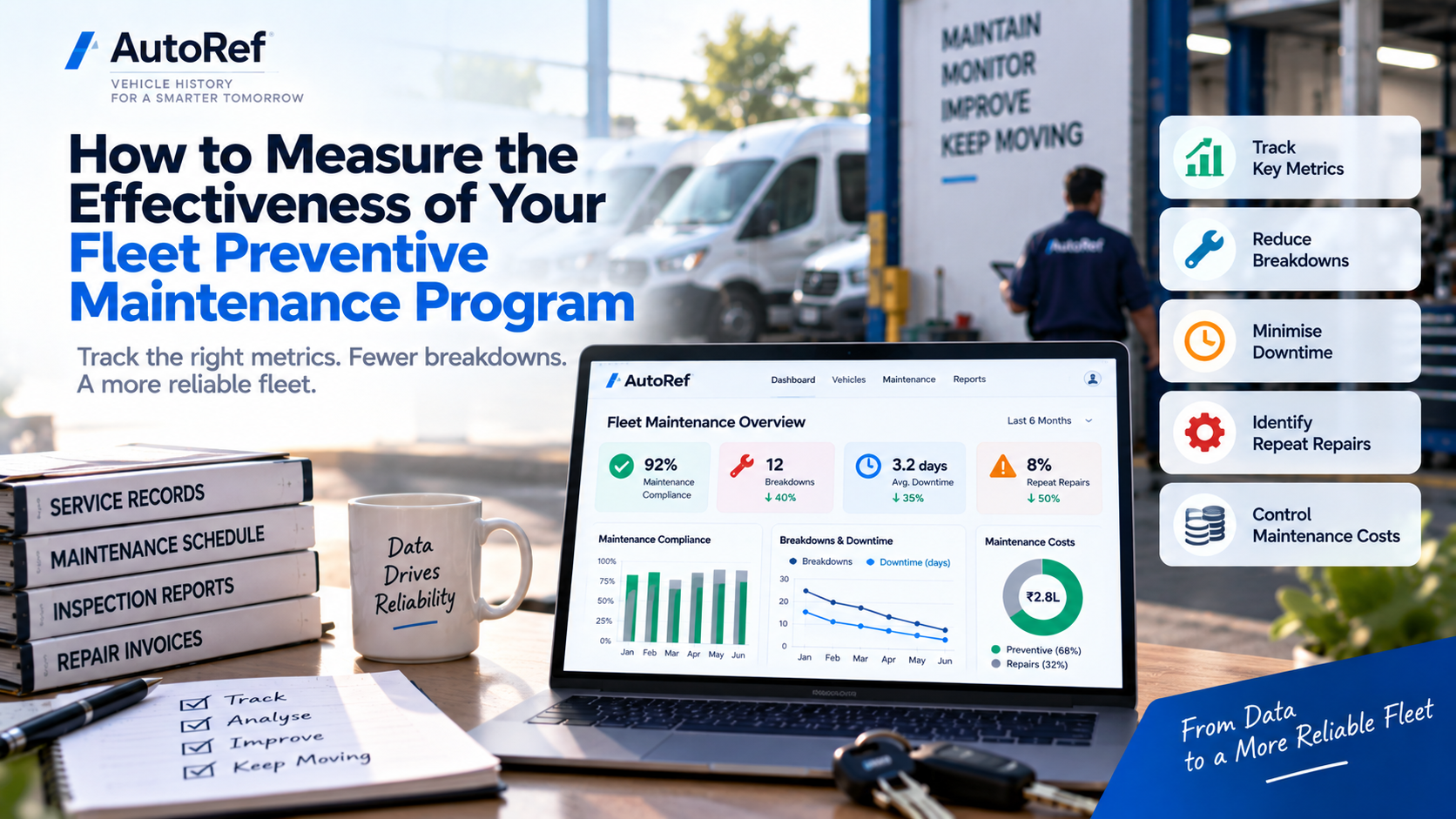
Measuring effectiveness requires looking beyond whether scheduled maintenance was completed. Fleet managers should connect maintenance compliance with outcomes such as breakdown frequency, vehicle downtime, repeat repairs and maintenance costs.
A useful fleet preventive maintenance program should help keep vehicles reliable and identify problems before they become larger operational issues.
1. Preventive Maintenance Compliance
The first metric to track is whether scheduled maintenance is actually being completed on time.
Compare:
Maintenance due → Maintenance completed → Maintenance completed on time
For example, if 100 services were due during a month and 85 were completed within the required window, the fleet has a 85% on-time maintenance rate.
A low compliance rate can indicate problems with:
- - Fleet maintenance scheduling
- - Workshop availability
- - Vehicle availability
- - Communication between drivers and fleet teams
- - Incomplete maintenance records
Tracking this metric helps determine whether your fleet maintenance schedule is being followed in practice rather than simply existing on paper.
2. Breakdown Frequency
Scheduled maintenance is ultimately intended to reduce avoidable vehicle failures.
Track how frequently vehicles experience:
- - Roadside breakdowns
- - Unexpected mechanical failures
- - Emergency repairs
- - Vehicles becoming unavailable during operations
Don't look only at the fleet-wide number.
Identify which vehicles are experiencing repeated breakdowns and compare their maintenance history with vehicles that remain reliable.
This can reveal whether certain vehicles require closer inspection or whether recurring problems are being missed.
3. Vehicle Downtime
Breakdown frequency tells you how often problems occur. Downtime tells you how much operational impact they create.
Track:
- - Number of vehicles unavailable
- - Hours or days unavailable
- - Downtime caused by maintenance
- - Downtime caused by unexpected repairs
- - Average time taken to return vehicles to service
This is particularly important for taxi and rental fleets where vehicle availability directly affects operations.
You can also monitor metrics such as minimum time to repair cars or average repair turnaround time to identify workshop or process bottlenecks.
4. Repeat Repairs
A vehicle that repeatedly returns for the same issue deserves attention.
Track whether the same:
- - Component
- - Fault
- - Repair
- - Maintenance issue
appears multiple times within a defined period.
For example, if the same vehicle repeatedly requires repairs related to a particular system, simply recording each repair as a separate completed task may hide the underlying pattern.
This is where historical maintenance records become valuable.
The goal is not just to count completed repairs, but to understand whether maintenance is actually resolving recurring problems.
5. Maintenance Cost Trends
Cost is another useful preventive maintenance metric, but it should be interpreted carefully.
Track:
- - Preventive maintenance spend
- - Unplanned repair spend
- - Emergency repair spend
- - Cost per vehicle
- - Cost trends over time
- - Repair costs for frequently problematic vehicles
A rise in preventive maintenance spending is not necessarily negative if it corresponds with fewer breakdowns and lower unexpected repair costs.
Similarly, reducing scheduled maintenance spend may not represent an improvement if breakdowns and downtime subsequently increase.
The relationship between maintenance activity and operational outcomes matters more than any single cost number.
6. Maintenance Backlog
A maintenance backlog shows how much scheduled work remains incomplete or overdue.
Track:
- - Overdue services
- - Upcoming services
- - Delayed inspections
- - Open maintenance tasks
- Vehicles repeatedly pushed beyond their maintenance window
A growing backlog can indicate that your fleet maintenance scheduling process is struggling to keep up with operational demands.
This is particularly useful for larger fleets where individual overdue vehicles can easily get lost in spreadsheets or disconnected records.
7. Use a Fleet Maintenance Scorecard
A practical fleet maintenance scorecard could contain:
| Metric | What it tells you |
|---|---|
| On-time maintenance % | Whether scheduled work is being completed |
| Breakdown frequency | How often unexpected failures occur |
| Vehicle downtime | Operational impact of maintenance issues |
| Repeat repairs | Whether recurring problems exist |
| Preventive vs emergency repairs | Balance between planned and reactive work |
| Maintenance backlog | Amount of overdue work |
| Repair turnaround time | How quickly vehicles return to service |
| Maintenance cost trend | How maintenance spending changes |
The important part is to review these metrics together.
A high maintenance-compliance rate combined with frequent breakdowns may indicate that the maintenance schedule itself needs review.
8. Connect Metrics With Vehicle Maintenance Records
Metrics are only as useful as the records behind them.
A fleet needs reliable vehicle maintenance records showing what was done, when it was done, the vehicle's mileage and what repairs were performed.
When these records are connected to individual vehicles, fleet managers can investigate questions such as:
- - Which vehicles break down most frequently?
- - Which vehicles have repeated repairs?
- - Are certain repairs appearing shortly after scheduled servicing?
- - Which vehicles have unusually high maintenance costs?
- - Is maintenance being delayed on specific vehicles?
This moves fleet reporting from simply counting maintenance events to understanding vehicle-level patterns.
How AutoRef Can Improve Fleet Maintenance Visibility
AutoRef helps fleet operators maintain connected service and repair information at the vehicle level.
By bringing service and repair records together, fleet teams can review a vehicle's maintenance history and use that context when assessing recurring issues and future maintenance needs.
This can complement a fleet maintenance checklist and scheduling process by making historical information easier to access when reviewing vehicle performance.
Conclusion
An effective preventive maintenance program should be measured by outcomes, not just activity.
Tracking maintenance compliance is important, but fleet managers should also monitor breakdown frequency, vehicle downtime, repeat repairs, maintenance backlog, repair turnaround time and cost trends.
The goal is to answer a simple question:
Is our maintenance process helping vehicles remain reliable and available?
When preventive maintenance metrics are connected with accurate vehicle maintenance records, fleet managers can identify problems earlier and continuously improve their maintenance strategy.
Frequently Asked Questions
Why are maintenance records important for fleet reporting?
Vehicle maintenance records provide the underlying information needed to identify recurring repairs, maintenance delays, breakdown patterns and differences between individual vehicles.
How do you measure fleet preventive maintenance effectiveness?
Compare scheduled maintenance activity with operational outcomes such as breakdowns, downtime and repeat repairs. A maintenance program should be evaluated on whether it is improving vehicle reliability and availability.
What are the most important preventive maintenance metrics?
Useful metrics include on-time maintenance compliance, breakdown frequency, vehicle downtime, repeat repairs, maintenance backlog, repair turnaround time and maintenance cost trends.
Related Articles
All Car Maintenance & Upkeep →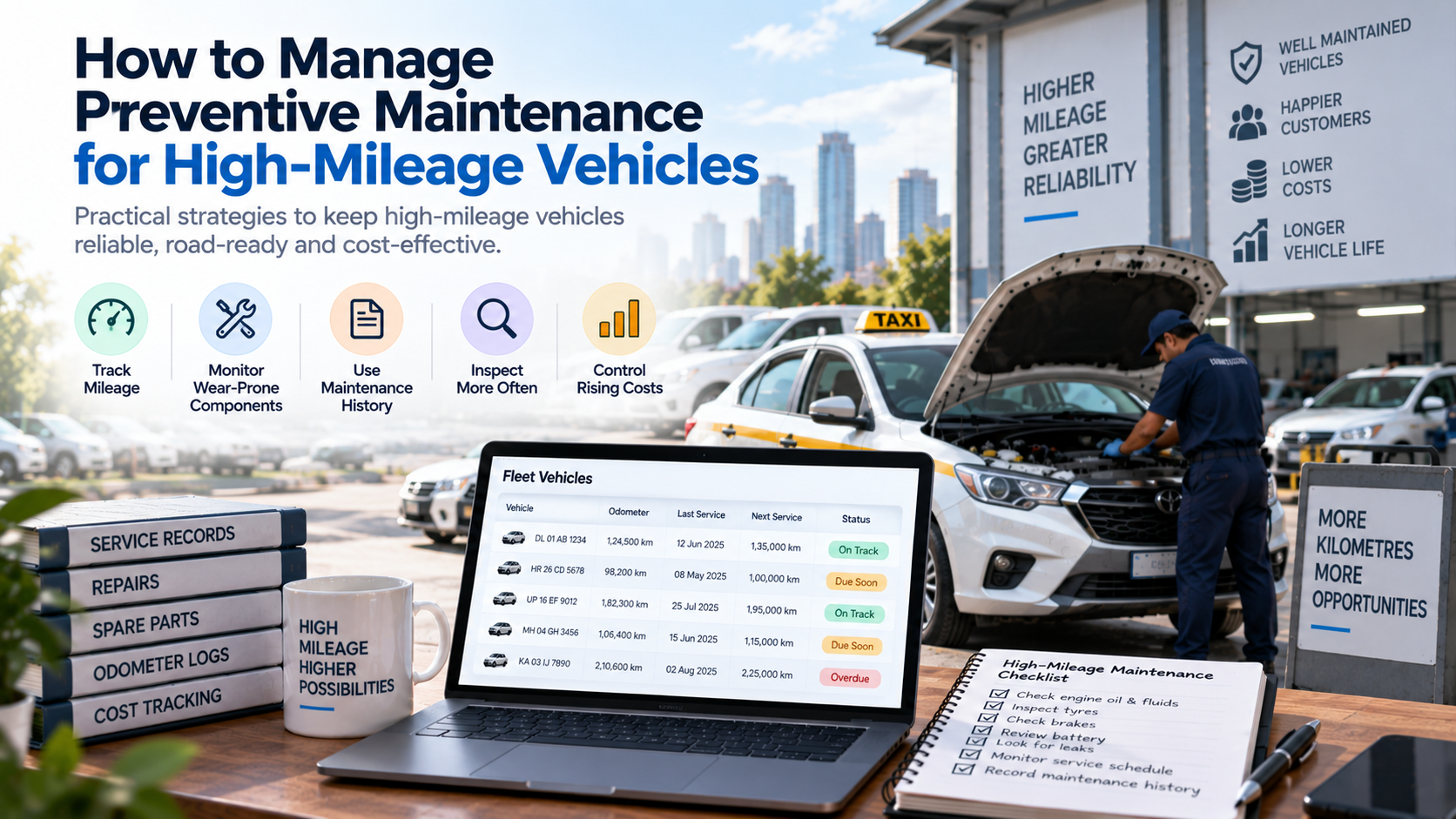 Car Maintenance & Upkeep
How to Manage Preventive Maintenance for High-Mileage Vehicles
Learn how to manage high-mileage vehicle maintenance using mileage, usage, operating conditions, vehicle condition, and maintenance history.
 Fleet Maintenance Management
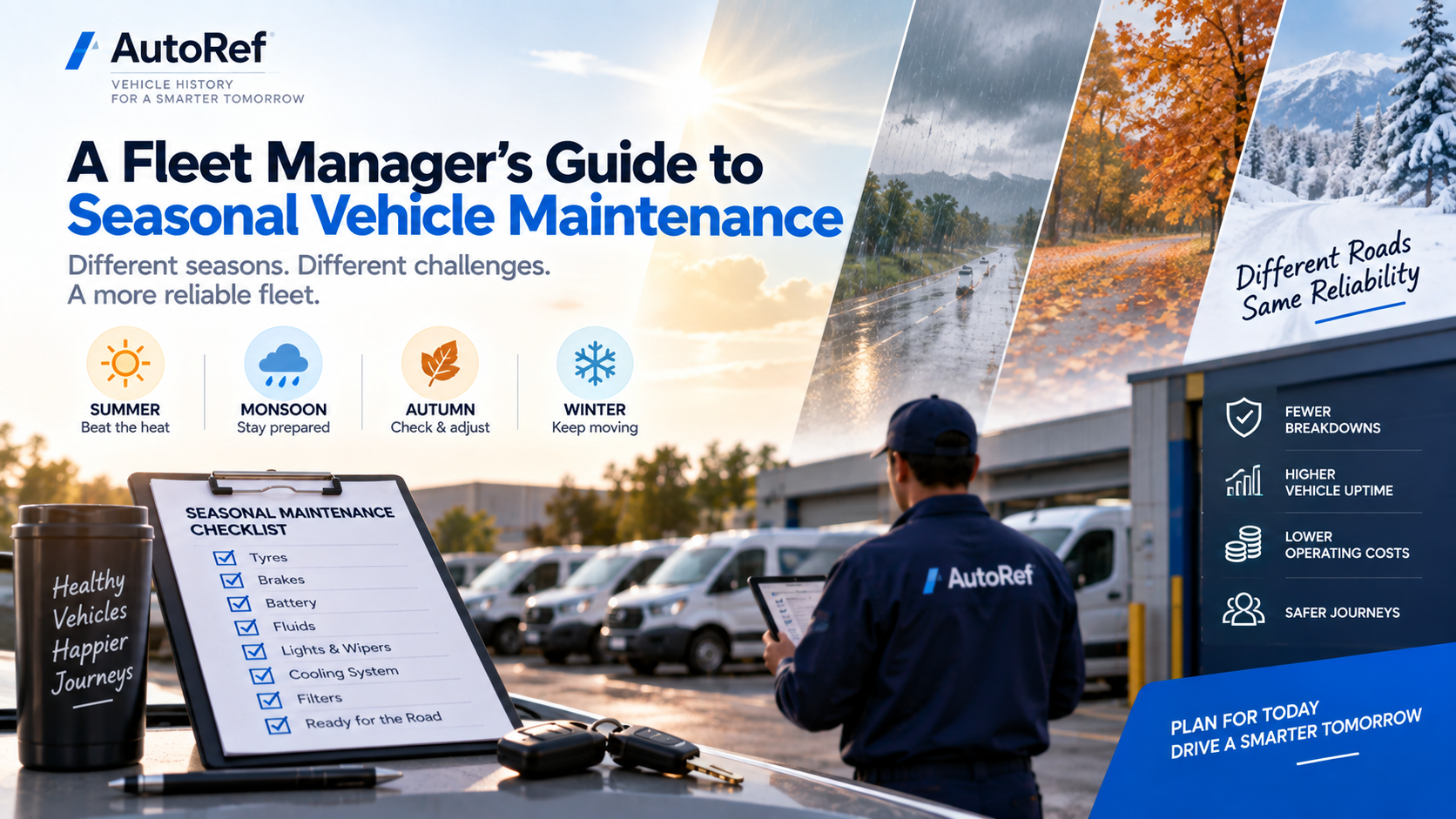
A Fleet Manager's Guide to Seasonal Vehicle Maintenance
Learn how seasonal weather, road conditions and vehicle usage affect fleet maintenance, with practical checks for tyres, brakes, batteries and fluids.
 Fleet Maintenance Management
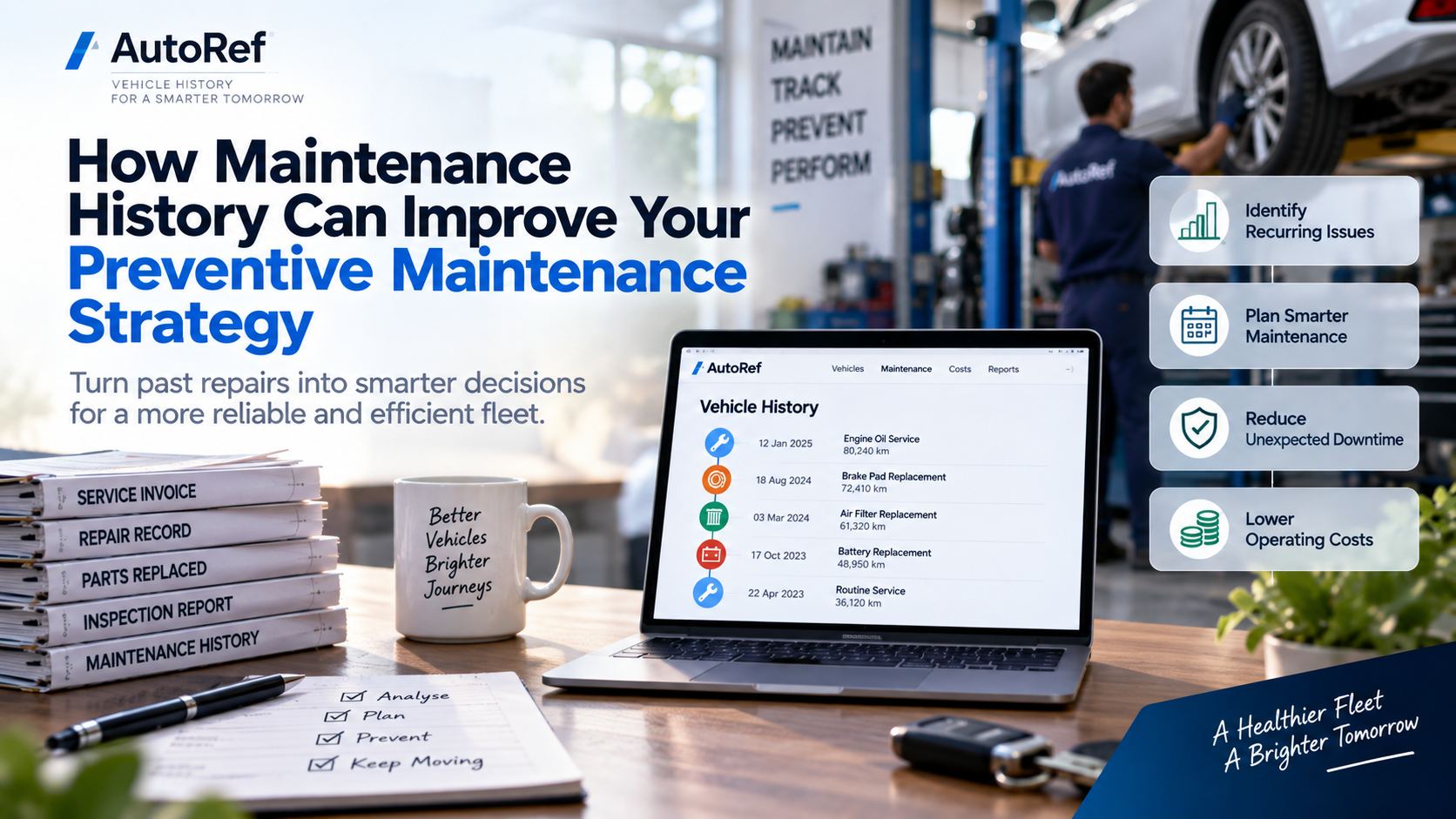
How Maintenance History Can Improve Your Preventive Maintenance Strategy
Learn how vehicle maintenance history helps identify recurring repairs, improve preventive maintenance, and make better vehicle maintenance decisions.