
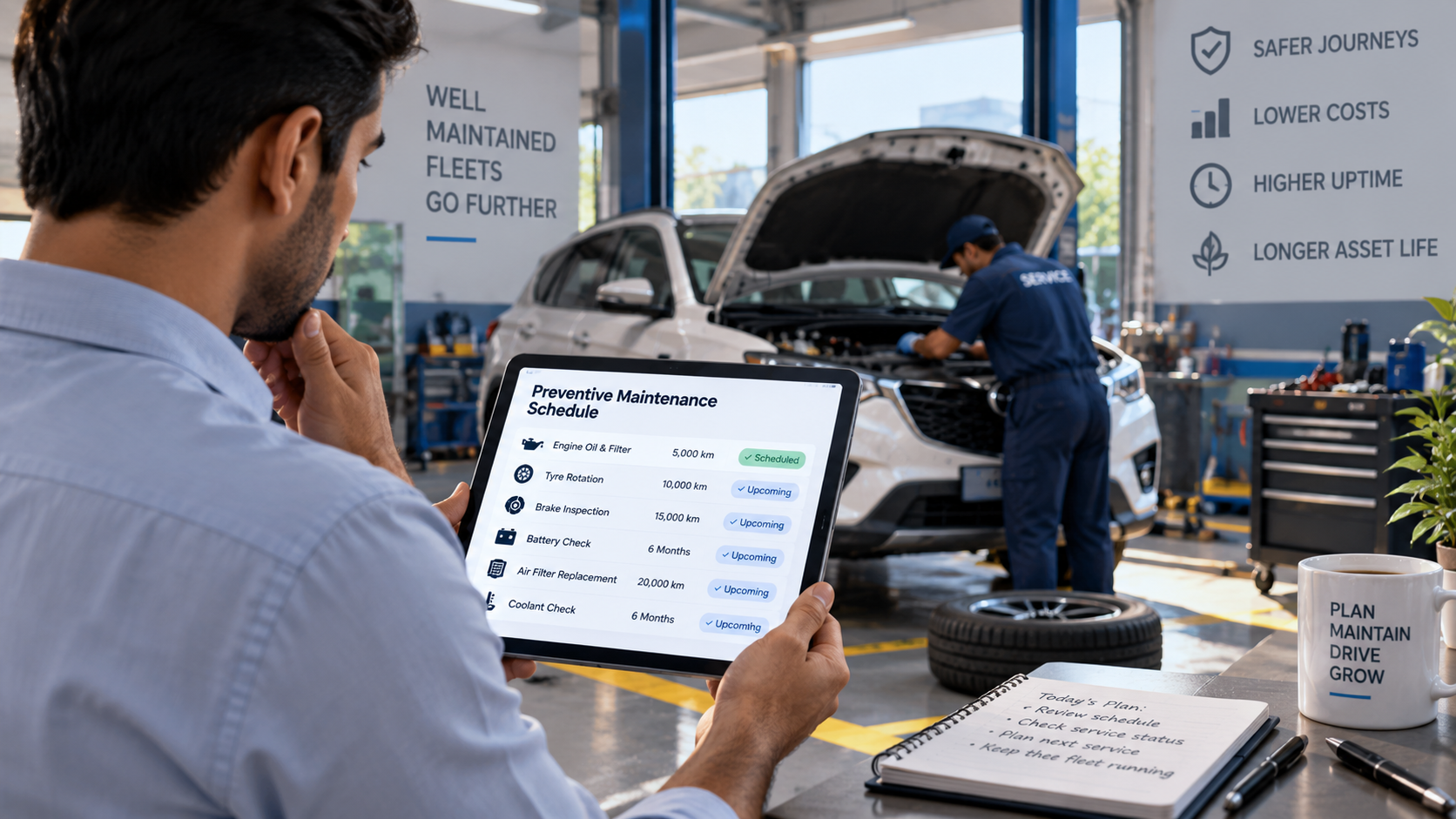
A fleet preventive maintenance schedule helps fleet owners plan vehicle servicing and inspections before maintenance issues lead to breakdowns, expensive repairs, or unexpected downtime.
However, an effective schedule should not simply assign the same service interval to every vehicle. Vehicle age, mileage, utilisation, operating conditions, and maintenance history can all affect how frequently a vehicle needs attention.
A structured schedule gives fleet owners a consistent way to determine what needs to be done, when it should happen, and which vehicles require closer monitoring.
1. Create a Baseline for Every Vehicle
Start by creating a maintenance profile for each vehicle in the fleet.
Record:
- - Make and model
- - Vehicle age
- - Current odometer reading
- - Previous service history
- - Major repairs and component replacements
- - Manufacturer-recommended service intervals
- - Typical monthly mileage
This baseline provides the information needed to build a schedule that reflects the actual condition and usage of each vehicle.
2. Consider Vehicle Usage
Not all fleet vehicles experience the same level of wear.
A taxi operating for long hours every day may accumulate significantly more mileage than a corporate vehicle used for employee transportation. Similarly, a self-drive rental vehicle may experience different driving patterns depending on how frequently it is rented.
Classify vehicles based on utilisation and operating patterns rather than applying one schedule across the entire fleet.
3. Define Maintenance Triggers
A preventive maintenance schedule can use multiple triggers.
Time-based
Some maintenance activities are due after a defined number of months, regardless of mileage.
Mileage-based
Servicing and component replacement may be linked to specific kilometre intervals.
Usage-based
High-utilisation vehicles may require additional inspections or more frequent servicing.
Condition-based
Inspection findings, unusual vehicle behaviour, warning indicators, or recurring issues can trigger maintenance outside the normal schedule.
Using a combination of these triggers creates a more practical schedule than relying on mileage or time alone.
4. Build the Maintenance Calendar
Once the triggers are defined, convert them into specific maintenance activities and expected dates or mileage thresholds.
Separate routine activities such as scheduled servicing and inspections from component-specific requirements such as tyre replacement, battery checks, or brake inspections.
The schedule should make it easy to identify:
- - What is due
- - Which vehicle it applies to
- - When or at what mileage it is due
- - Whether the work has been completed
- - What is coming up next
5. Track Completed Maintenance
A schedule is only useful if completed work is recorded accurately.
After every service or repair, update the vehicle's maintenance history with the date, mileage, work performed, parts replaced, and relevant costs.
This prevents the schedule from becoming a simple list of planned activities disconnected from what actually happened to the vehicle.
6. Review and Adjust the Schedule
A preventive maintenance schedule should evolve with the fleet.
Review maintenance history periodically to identify:
- - Vehicles requiring frequent repairs
- - Recurring component failures
- - Increasing maintenance frequency
- - Missed or delayed servicing
- - Differences between high- and low-utilisation vehicles
These patterns can help fleet owners adjust maintenance requirements and identify vehicles that may need additional attention.
Managing a Fleet Preventive Maintenance Schedule
For a small fleet, spreadsheets and calendar reminders may be sufficient. As the number of vehicles, locations, and service providers increases, maintaining accurate schedules and vehicle histories manually becomes more difficult.
A centralized system such as AutoRef can help fleet owners maintain vehicle-level service and repair history and keep upcoming maintenance requirements organized in one place.
The goal is not simply to create a maintenance calendar. It is to maintain an accurate connection between what was planned, what was performed, and what the vehicle may need next.
Conclusion
Creating a fleet preventive maintenance schedule starts with understanding each vehicle individually. By combining manufacturer recommendations with mileage, utilisation, operating conditions, and maintenance history, fleet owners can create schedules that are more practical and responsive to actual vehicle usage.
A well-maintained schedule helps turn maintenance from a reactive activity into a consistent process for managing vehicle reliability and availability.
Frequently Asked Questions
How often should fleet vehicles be serviced?
Service intervals depend on manufacturer recommendations, mileage, vehicle age, utilisation, and operating conditions. High-utilisation vehicles may require more frequent servicing and inspections.
Should every fleet vehicle follow the same maintenance schedule?
No. Vehicles with different mileage, usage patterns, ages, and operating conditions may require different maintenance schedules.
What should a fleet maintenance schedule include?
It should include each vehicle's maintenance activities, mileage or time triggers, due dates, completed work, and upcoming requirements.
Related Articles
All Fleet Maintenance Management → Fleet Maintenance Management
What Causes Preventive Maintenance Programs to Fail?
What Causes Preventive Maintenance Programs to Fail?
 Fleet Maintenance Management
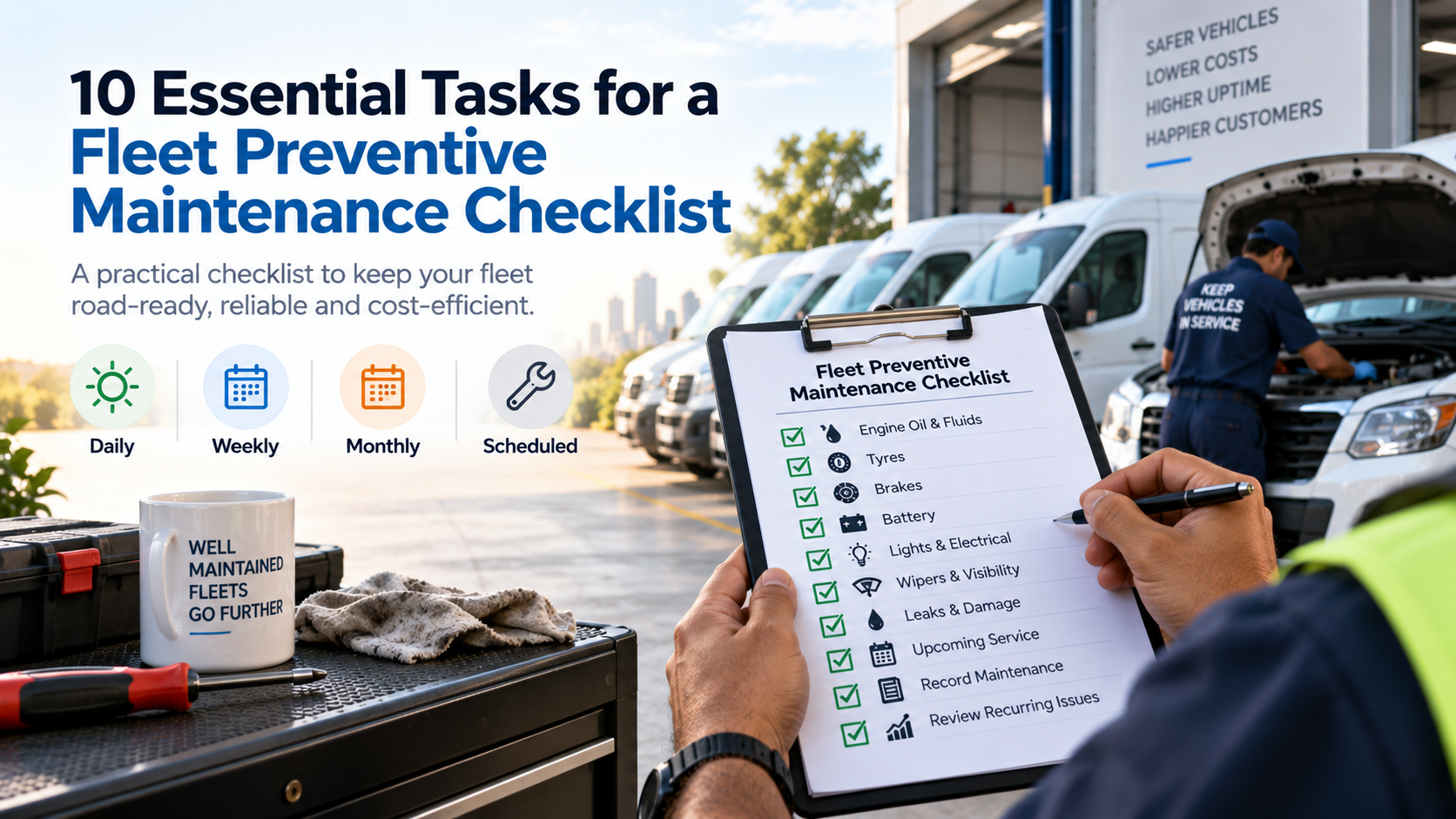
10 Essential Tasks for a Fleet Preventive Maintenance Checklist
Use this fleet preventive maintenance checklist to track 10 essential tasks covering tyres, fluids, brakes, batteries, servicing, and vehicle history.
 Fleet Maintenance Management
How Often Should Fleet Vehicles Be Serviced?
Set fleet service intervals using mileage, usage, conditions, age and repair history not just the calendar. Build schedules per vehicle for reliability.