
Introduction
A fleet preventive maintenance checklist gives fleet owners and managers a consistent way to inspect vehicles, identify developing issues, and ensure routine maintenance is not overlooked.
The exact checklist will vary by vehicle type, manufacturer recommendations, mileage, and operating conditions. However, most fleets should monitor a core set of maintenance tasks regularly.
The key is not simply completing inspections. Each finding should be recorded and, where necessary, connected to a maintenance action.
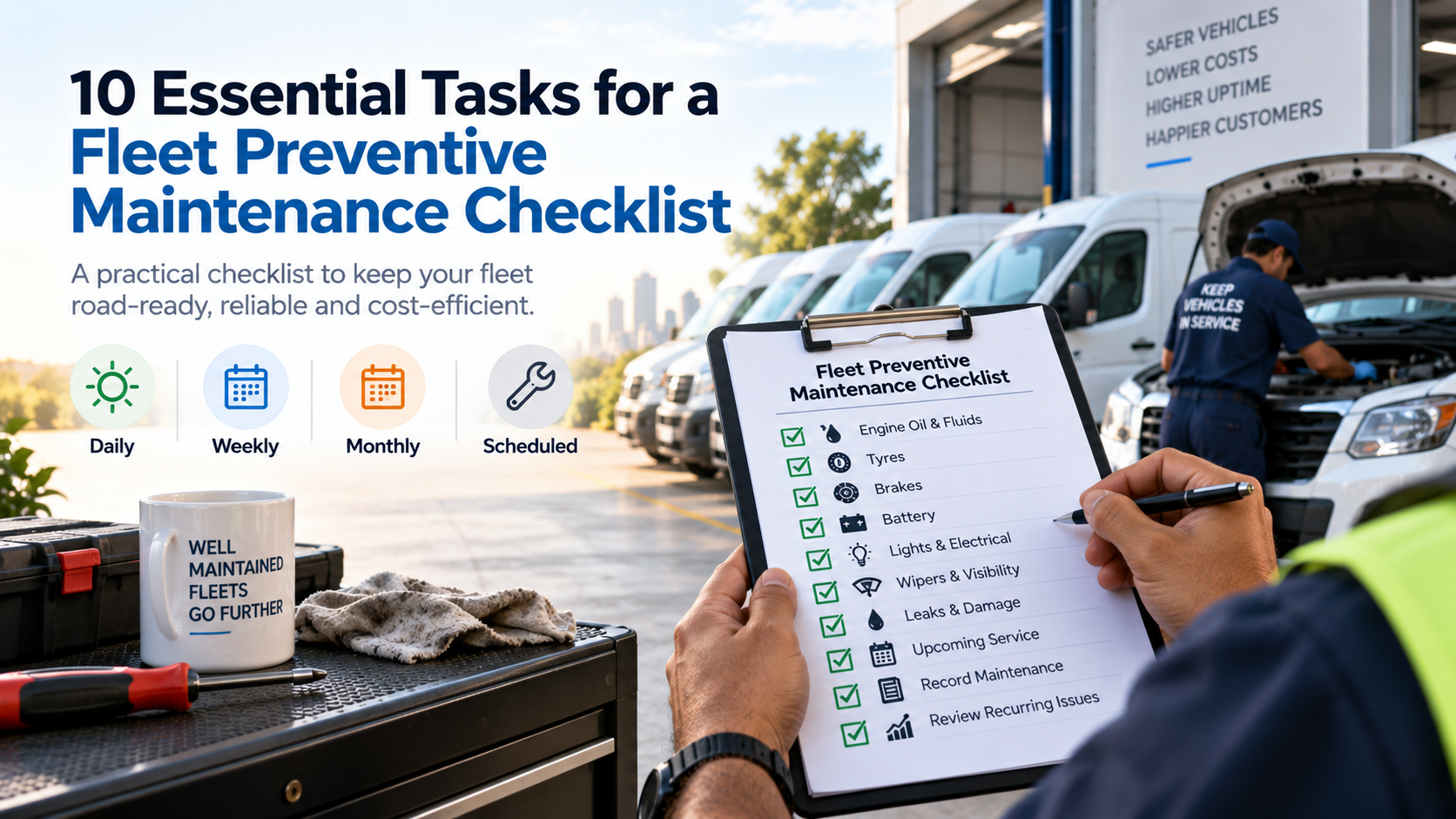
10 Essential Tasks for a Fleet Preventive Maintenance Checklist
1. Check Engine Oil and Other Fluids
Inspect engine oil, coolant, brake fluid, transmission fluid, and windshield washer fluid as applicable. Low or contaminated fluids can indicate maintenance requirements that should be addressed before they develop into larger problems.
2. Inspect Tyres
Check tyre pressure, tread depth, visible damage, uneven wear, and the condition of the spare tyre where applicable.
For high-utilisation fleets, regular tyre inspections are particularly important because excessive or uneven wear can affect safety, handling, and operating costs.
3. Check Brakes
Inspect brake pads, discs, drums, and other relevant components according to the vehicle manufacturer's recommendations and inspection requirements.
Unusual noise, vibration, reduced braking performance, or warning indicators should trigger further inspection.
4. Inspect the Battery
Check battery condition, terminals, and signs of corrosion or leakage. Battery issues can cause unexpected starting failures and vehicle downtime.
Vehicles operating frequently or in demanding conditions may require closer monitoring.
5. Check Lights and Electrical Systems
Inspect headlights, brake lights, indicators, hazard lights, reverse lights, and other essential electrical systems.
Faulty lights can create safety issues and may also result in compliance problems depending on local requirements.
6. Inspect Wipers, Windscreen, and Visibility
Check wiper blades, washer fluid, windscreen condition, mirrors, and other visibility-related components.
These are simple checks but become particularly important when vehicles operate in heavy rain, dust, or other challenging conditions.
7. Look for Leaks, Damage, and Warning Signs
Inspect the vehicle for visible fluid leaks, body damage, unusual noises, warning lights, or other signs of developing problems.
Driver feedback should also be captured because issues may appear during operation that are not immediately visible during a stationary inspection.
8. Review Upcoming Scheduled Maintenance
Check whether the vehicle is approaching a time- or mileage-based service requirement.
A preventive maintenance schedule should identify upcoming servicing before the vehicle reaches its maintenance threshold, giving the operator time to plan the work.
9. Record Completed Maintenance
Every service, repair, inspection, and component replacement should be recorded against the relevant vehicle.
Maintaining a complete vehicle maintenance history makes it easier to understand what has already been done and identify recurring problems.
10. Review Recurring Issues
Regularly review maintenance records to identify vehicles with repeated repairs, frequent component replacements, or unusual maintenance requirements.
This turns a checklist from a simple inspection tool into part of a broader preventive maintenance process.
How to Organise the Checklist
Not every task needs to be performed at the same frequency.
A practical structure can include:
- - Daily: Basic visual checks, tyres, warning indicators, lights, and obvious damage.
- - Weekly: Fluids, battery condition, tyre condition, and other routine checks.
- - Monthly: Deeper inspections and review of recurring issues.
- - Scheduled: Manufacturer-recommended servicing and component maintenance.
The frequency should always be adapted to the vehicle, manufacturer guidance, mileage, utilisation, and operating environment.
Managing a Fleet Maintenance Checklist
A checklist becomes difficult to manage when records are spread across paper forms, spreadsheets, invoices, and messages.
AutoRef can help fleet owners maintain vehicle-level service and repair records in one place, making it easier to understand completed maintenance and use historical information when planning future work.
Conclusion
A good fleet preventive maintenance checklist provides consistency, but the checklist itself is only one part of an effective maintenance process.
The real value comes from completing the checks, recording the findings, acting on issues, and using the resulting vehicle history to improve future maintenance decisions.
Frequently Asked Questions
What should be included in a fleet preventive maintenance checklist?
Common tasks include checking fluids, tyres, brakes, battery, lights, electrical systems, visibility components, leaks, warning indicators, scheduled maintenance, and previous maintenance records.
How often should a fleet maintenance checklist be completed?
Some checks should be performed daily or weekly, while others can be monthly or aligned with scheduled servicing. Frequency should reflect manufacturer recommendations, mileage, utilisation, and operating conditions.
Why should maintenance checklist results be recorded?
Recording inspection findings creates a history for each vehicle and helps identify recurring problems, overdue maintenance, and vehicles that require additional attention.
Related Articles
All Fleet Maintenance Management →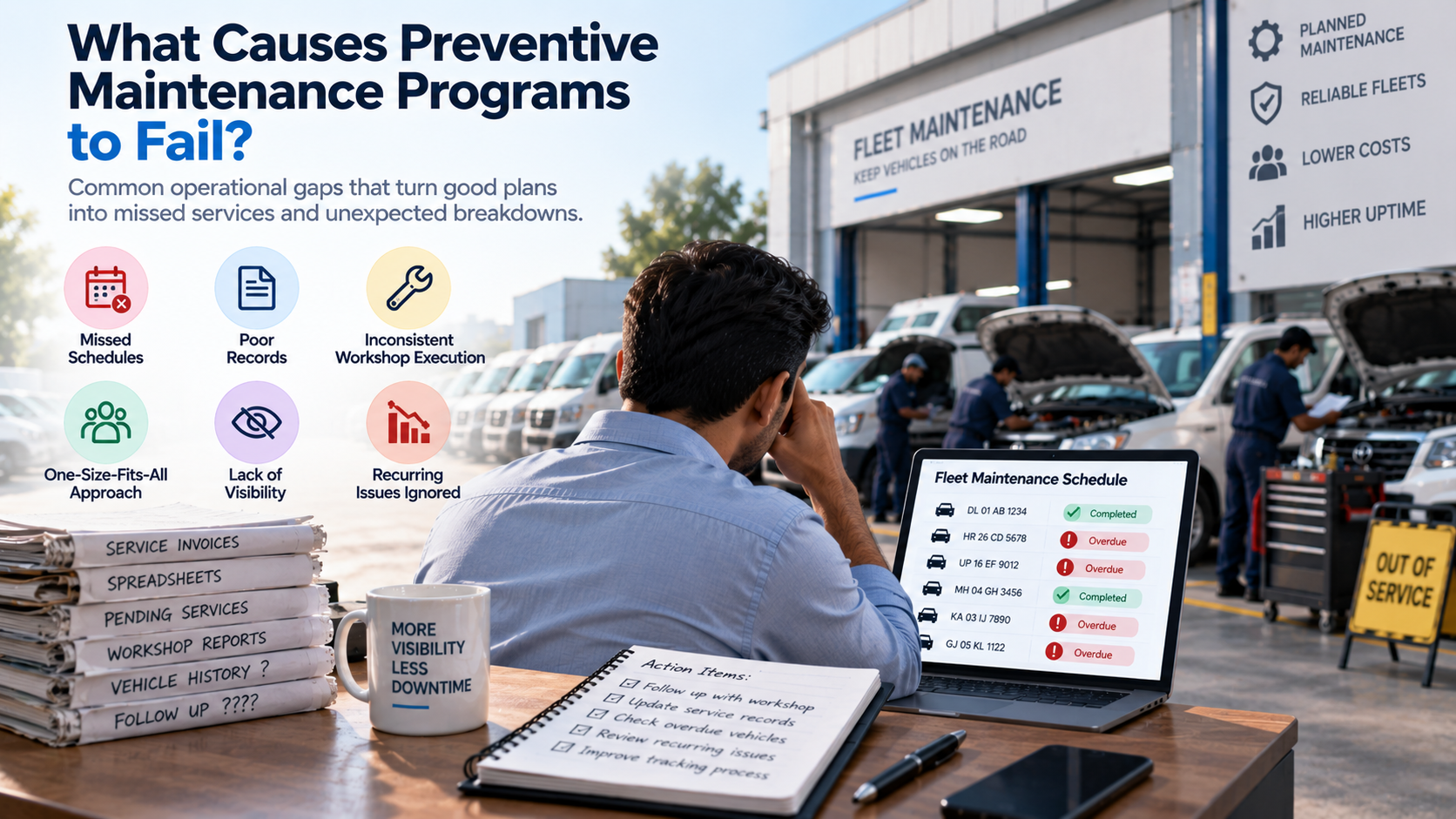 Fleet Maintenance Management
What Causes Preventive Maintenance Programs to Fail?
What Causes Preventive Maintenance Programs to Fail?
 Fleet Maintenance Management
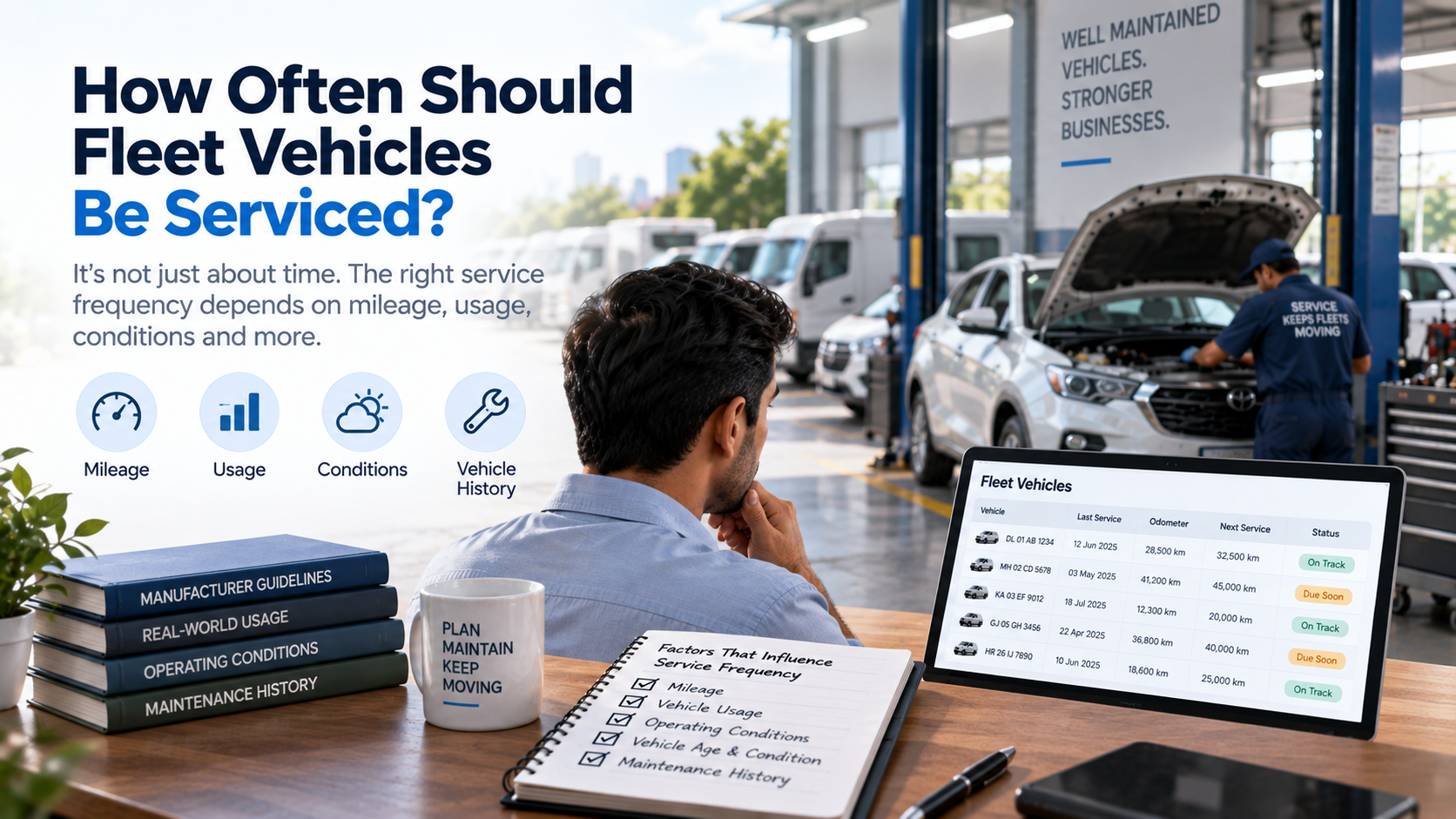
How Often Should Fleet Vehicles Be Serviced?
Set fleet service intervals using mileage, usage, conditions, age and repair history not just the calendar. Build schedules per vehicle for reliability.
 Fleet Maintenance Management
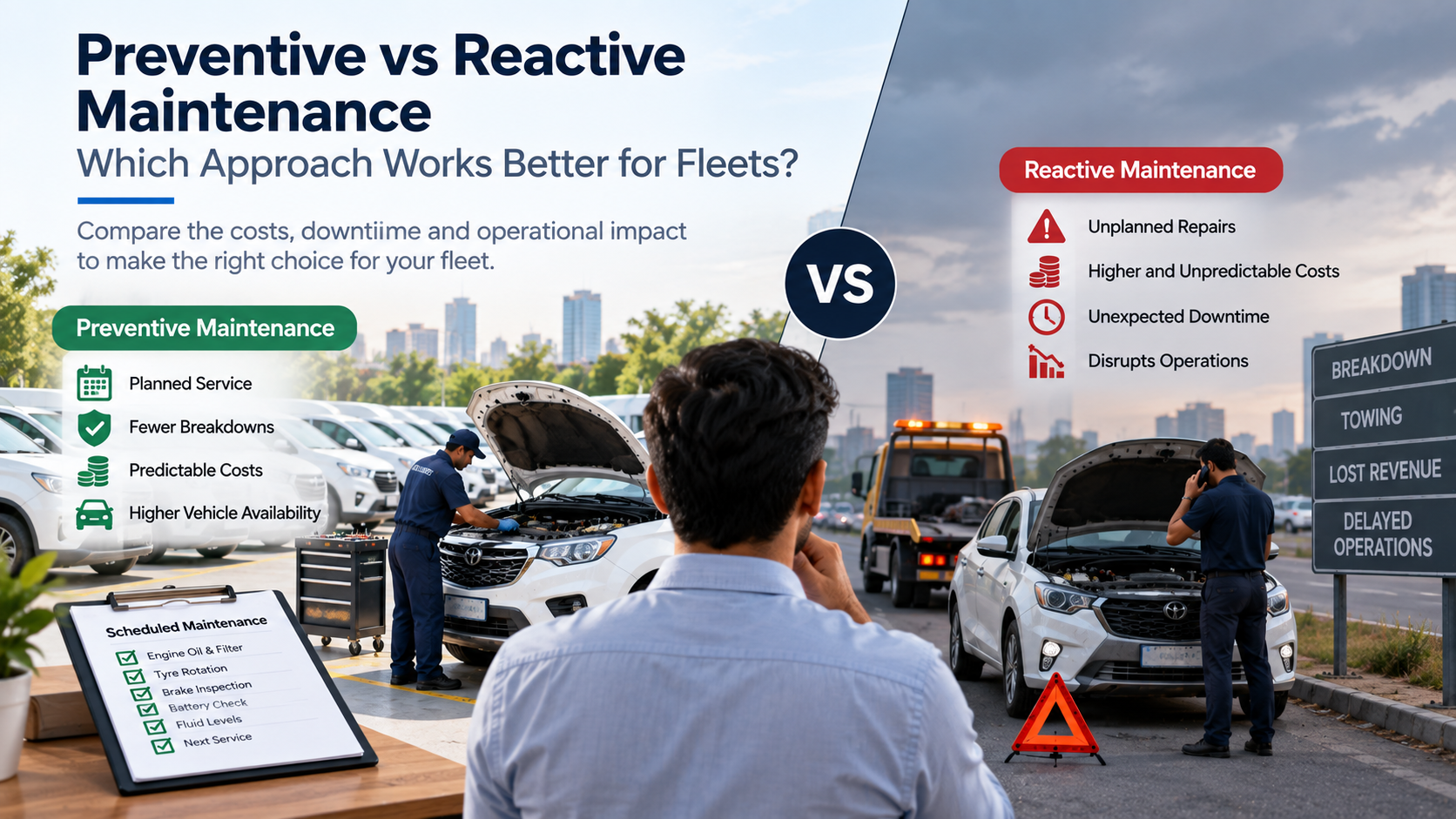
Preventive vs Reactive Maintenance: Which Approach Works Better for Fleets?
Compare preventive vs reactive maintenance and understand how each approach affects fleet costs, downtime, vehicle availability, and operations.