
Introduction
Running a vehicle is not only about servicing it on time. A vehicle can be mechanically fit and still become a problem for an owner because an important document has expired.
For a private car, the issue may be forgetting an insurance or registration-related date. For a taxi operator, transport company, hospital or hotel, the problem can multiply across vehicles, one car may have an upcoming permit renewal, another may need attention for registration, while a third may have a different compliance date altogether.
The difficult part is often not completing the renewal. It is remembering what expires, when it expires and which vehicle it belongs to.
Why Vehicle Compliance Becomes Difficult to Manage
Consider a taxi operator with eight vehicles.
Vehicle A may have an insurance renewal in October, Vehicle B a permit renewal in November, Vehicle C approaching an RC-related renewal date, while the remaining vehicles have different PUC or permit dates.
When this information is kept in paper files, WhatsApp messages or a spreadsheet, common questions become difficult to answer:
- - Which vehicle has a permit expiring this month?
- - Does this vehicle still have a valid permit for interstate operations?
- - Which vehicle needs attention next?
- - Did we renew it already?
- - Where is the relevant document?
The bigger the fleet, the easier it is for an important date to get lost.
Permits Are Not Just Another Document
A permit is particularly important for transport vehicles because the permit determines the authorised use of the vehicle.
Parivahan states that a permit is an instrument issued by the State or Regional Transport Authority authorising use of a vehicle in the manner as specified under the Motor Vehicles Act.
The distinction matters because different permit types have different conditions.
For example, Parivahan's published information describes National Permits for goods vehicles and states that they are issued for a minimum of four continuous states including the home state. The same guidance lists a maximum vehicle age of 12 years for a particular vehicle and 15 years for a multi-axle vehicle for obtaining a National Permit. Parivahan Sewa
That means an operator cannot simply maintain a generic "permit valid" field. Permit type, vehicle eligibility and validity all matter.
The All India Permit Problem
For public vehicles operating across state borders, the situation becomes even more important.
The Ministry's All India Tourist Permit material states that a permit under the applicable rules can be valid throughout India, and that the vehicle must carry the required permit. It also specifies that the validity of the permit must be displayed on the vehicle for the relevant category.
The official Parivahan information also provides an online facility for printing an All India Tourist Vehicle Permit Certificate using the registration number and chassis details.
For example, a transport operator running vehicles between Delhi, Uttar Pradesh, Rajasthan and Haryana, the practical problem is not knowing that an All India or National Permit exists. It is knowing which vehicle has which permit and when the relevant permit needs attention.
What Happens When a Date Is Missed?
Imagine a hotel operates six cars used for airport transfers.
One vehicle's permit expires on Friday.
The owner has the document saved as a PDF in an old email account, but nobody has checked the date. The car looks perfectly healthy, has fuel and has just completed its service.
Yet the vehicle may not be usable for the intended operation if the required permit is no longer valid.
A similar problem can happen with an ambulance. A hospital cannot afford to discover an administrative compliance issue only when a vehicle is urgently needed.
For a transport operator, an unavailable vehicle can also mean missed trips, reassignment of another vehicle or operational disruption.
RC Expiry Is Another Long-Term Risk
Registration-related dates are easy to ignore because they are not checked every week.
The Parivahan FAQ states that non-transport vehicle registration is generally taken for a 15-year period, with renewal thereafter in five-year periods, subject to the applicable rules.
That creates a different kind of problem: the date is far enough away that owners may forget it entirely.
A car purchased years ago may feel as though its registration is permanently valid until an official reminder, renewal requirement or transaction forces the owner to check.
For commercial operations, the challenge can be more complex because vehicle age, permit requirements and applicable transport rules need to be considered together.
The Real Problem: Fragmented Compliance Information
An operator may already have all the documents.
The problem is that the information is scattered:
Email: insurance policy
Paper file: permit
Phone gallery: RC copy
WhatsApp: renewal reminder
Spreadsheet: partial expiry dates
Nothing is necessarily missing, but there is no single place answering:
"What is the current compliance status of this vehicle?"
This is where a vehicle-level system becomes useful.
How AutoRef Can Help
AutoRef is designed around the vehicle, rather than treating compliance documents as unrelated records.
For each vehicle, the owner can maintain relevant compliance information such as:
- - RC validity
- - Insurance
- - PUC/PUCC
- - Challans
- - Permits
- - Other applicable compliance information
The benefit becomes more visible with multiple vehicles.
A taxi operator with ten cars can review each vehicle separately instead of searching through ten document folders.
A hospital can associate compliance information with each ambulance.
A hotel can maintain records for its guest-transport vehicles.
A transport operator can keep permit information connected to the vehicle that actually uses it.
The goal is not merely to digitise documents. It is to make vehicle compliance information easier to find and act on.
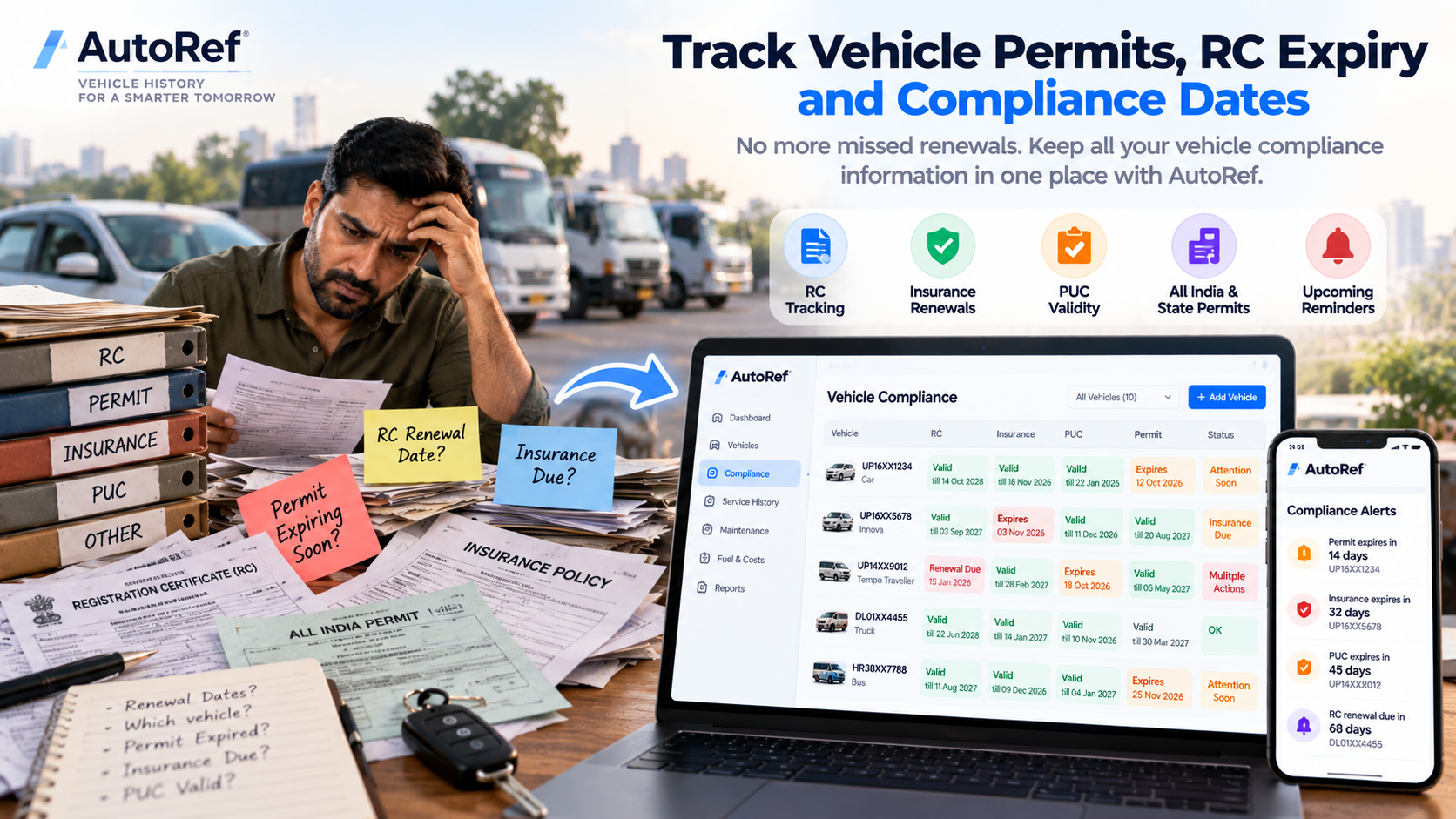
A Practical Vehicle Compliance View
A simple structure could look like this:
| Vehicle | RC | Insurance | PUC | Permit | Status |
|---|---|---|---|---|---|
| UP16 XX 1234 | Valid | Valid | Valid | 12 Oct 2026 | Attention soon |
| UP16 XX 5678 | Valid | 03 Nov 2026 | Valid | Valid | Insurance due |
| UP16 XX 9012 | Renewal due | Valid | 18 Oct 2026 | Valid | Multiple actions |
Instead of asking someone to search through documents, the owner can immediately see which vehicles need attention.
Conclusion
Vehicle compliance is often difficult because there are too many dates spread across too many vehicles and documents.
Permits may have different validity periods and conditions. National or All India permits can matter when vehicles operate across states. RC-related renewal can be years away, making it easy to forget. Insurance, PUC and other requirements add more dates to track.
For an individual owner, this can mean one missed renewal. For a taxi fleet, hospital ambulance operation, hotel transport service or logistics business, the same problem can affect several vehicles simultaneously.
A vehicle-level compliance record gives owners a clearer way to organise this information.
AutoRef brings vehicle records and compliance information together so that owners can see what is valid, what is approaching expiry and which vehicle needs attention, rather than discovering the problem after a date has already passed.
Frequently Asked Questions
Is AutoRef useful for fleets with different compliance dates?
Yes. This is particularly relevant for taxi operators, ambulances, transport vehicles, hotel cars and other small fleets where every vehicle can have different renewal and compliance dates.
Can AutoRef track vehicle permit expiry dates?
AutoRef is designed to maintain permit and other compliance information against the relevant vehicle, helping owners keep permit validity organised along with other vehicle records.
Can I track All India or National Permit information in AutoRef?
Yes, applicable permit details can be maintained against the vehicle so that operators can keep permit-related information alongside the rest of the vehicle's compliance record. The exact legal applicability and requirements of a permit depend on the vehicle and permit category.
Can AutoRef track RC, insurance and PUC together?
Yes. AutoRef's vehicle-centric compliance approach allows information such as RC, insurance and PUC/PUCC to be maintained together for the vehicle rather than in separate records.
Related Articles
All Vehicle Compliance →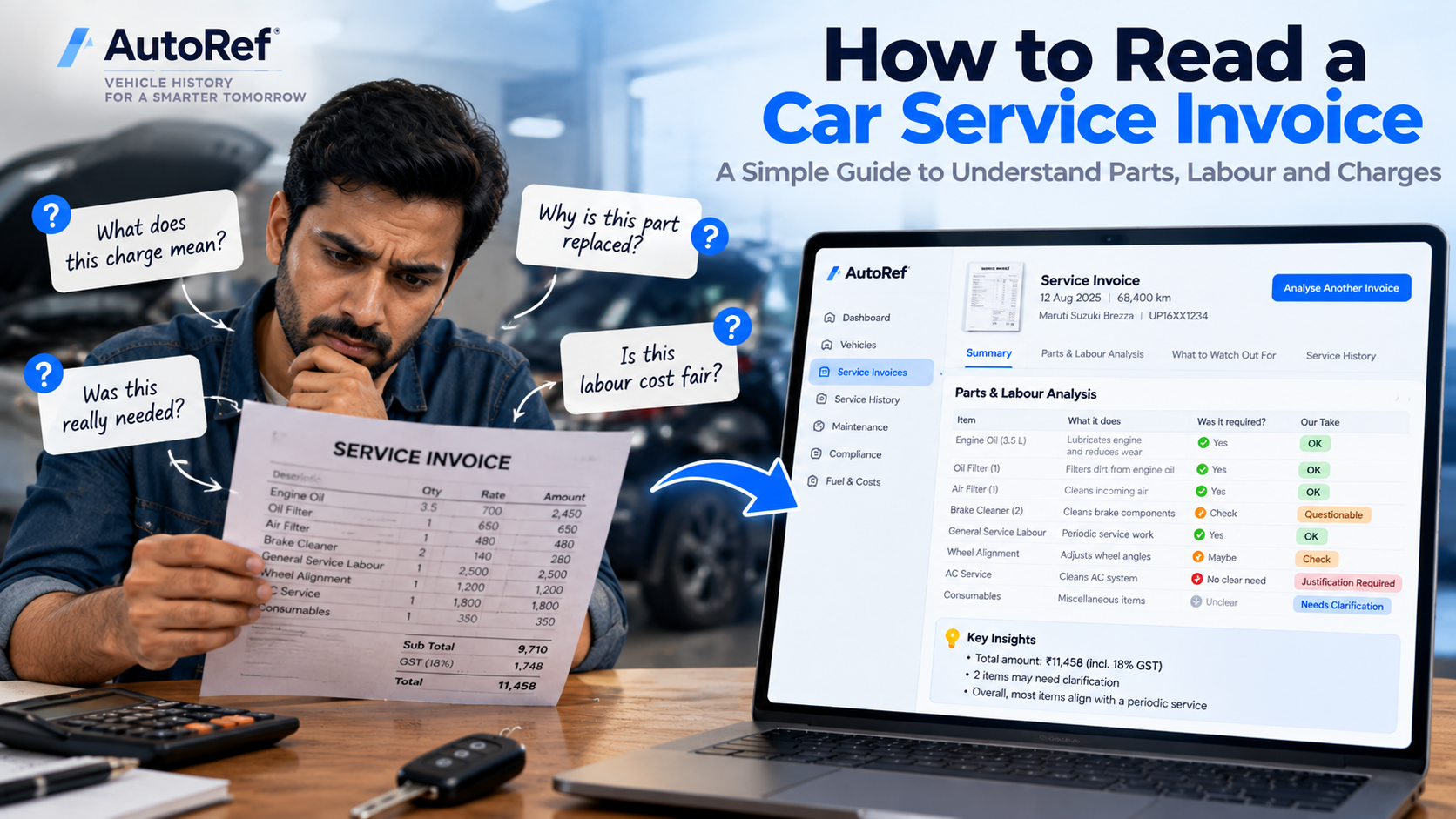 Vehicle Compliance
How to Read a Car Service Invoice: A Simple Guide
Learn how to read a car service invoice, understand parts, labour, quantities and taxes, and identify charges that may need clarification.
 Car Service & Repair
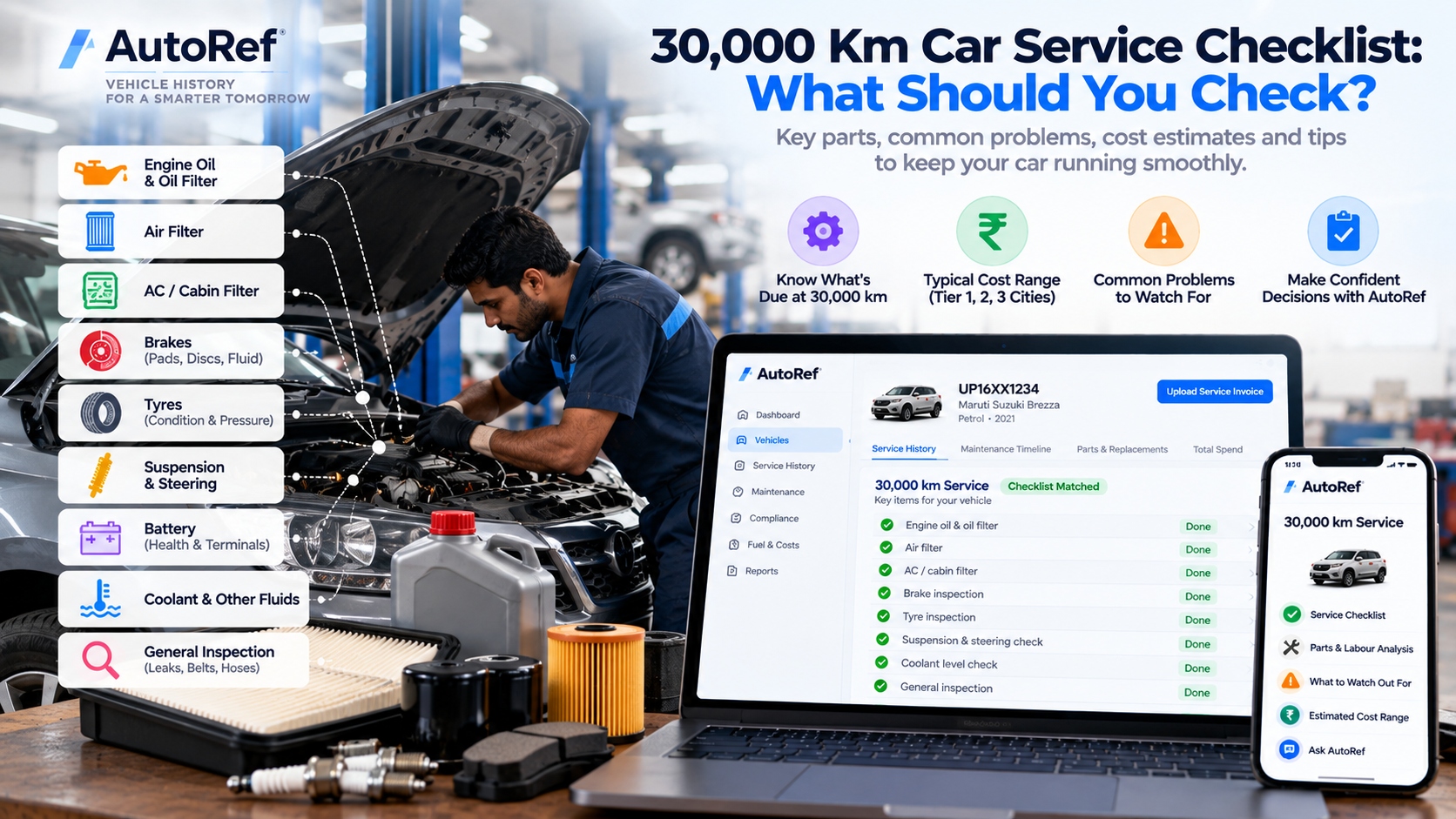
30,000 Km Car Service Checklist: What Should You Check?
Use this 30,000 km car service checklist to understand common parts, inspections, service costs, common problems and what to check before paying.
 Car Service & Repair
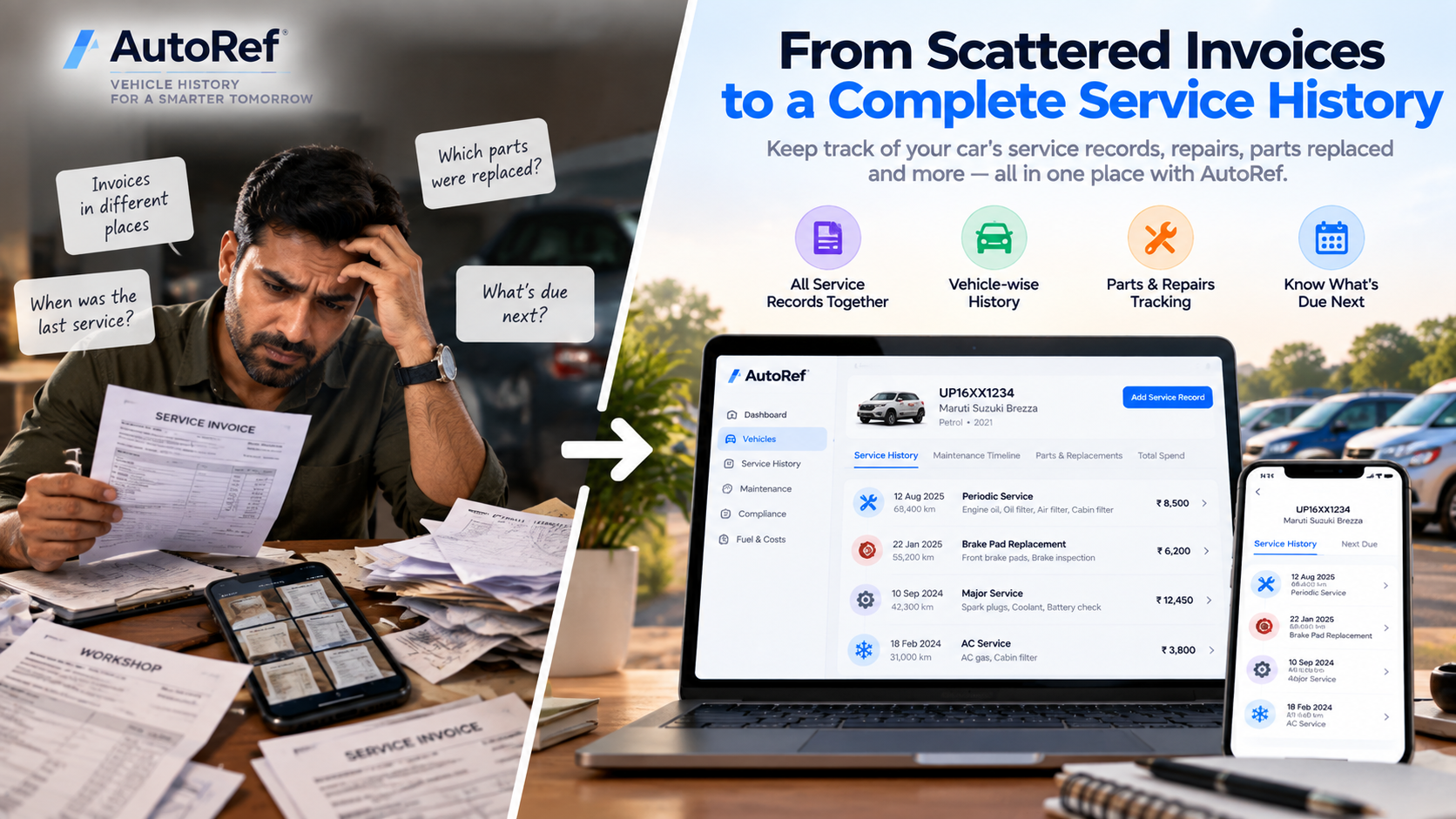
How to Keep Track of Your Car Service History
Learn what to record in your car service history, how to organize invoices, log mileage and parts, and use records to plan maintenance with confidence.