
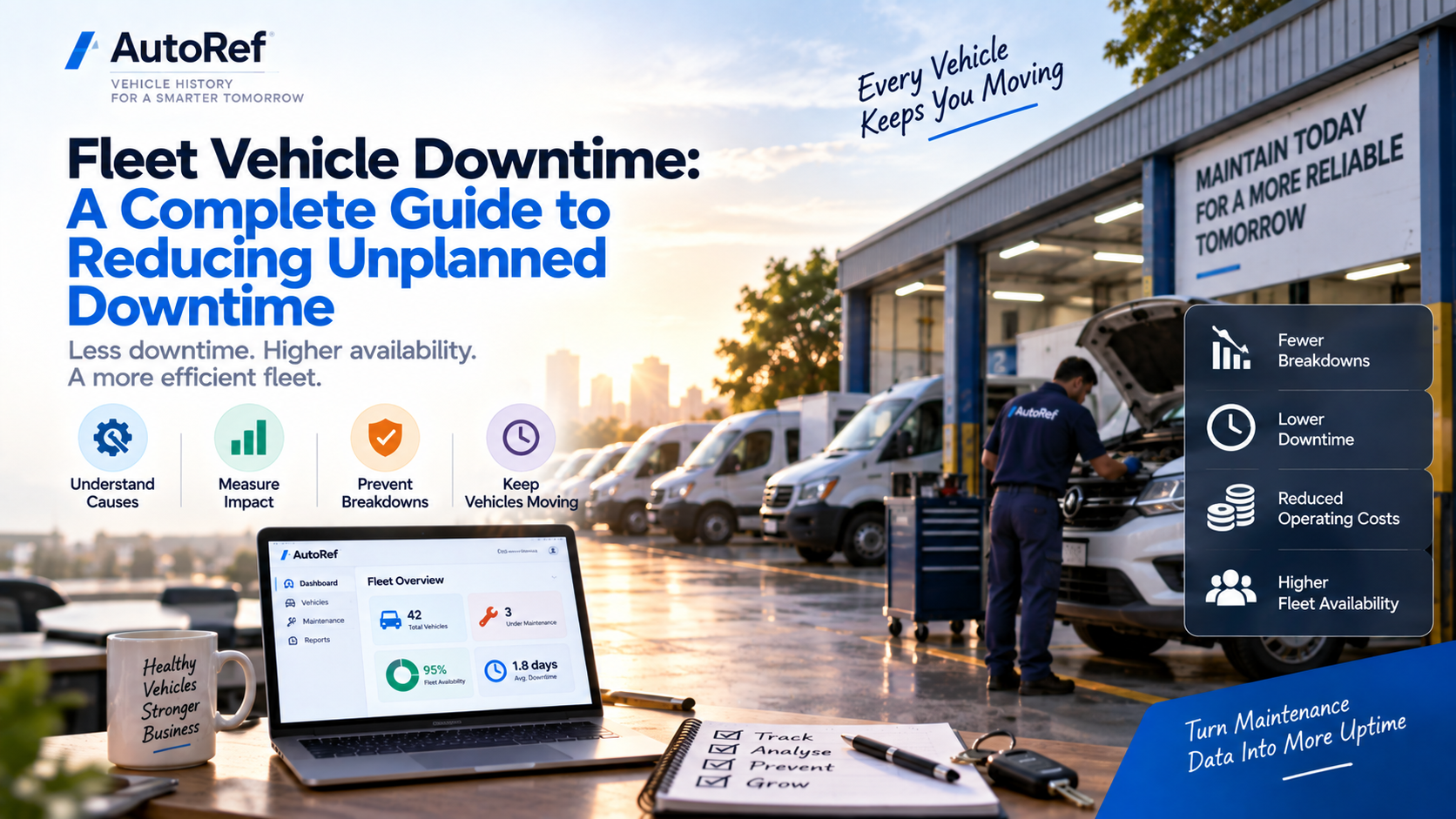
Introduction
A vehicle that is sitting in a workshop is not generating value for the business.
For a large fleet, one unavailable vehicle may be manageable. But when several vehicles are simultaneously undergoing unexpected repairs, downtime can quickly affect schedules, revenue, customer commitments and operating costs.
The problem is not limited to large fleets. Somebody managing one to three vehicles can face the same challenge. If one vehicle is unavailable, a significant portion of the available capacity may immediately disappear.
This makes fleet vehicle downtime an important maintenance and operational metric, regardless of fleet size.
What Is Fleet Vehicle Downtime?
Vehicle downtime is the period during which a vehicle is unavailable for its intended operation because of maintenance, repair, inspection, breakdown or another service-related issue.
Downtime can be:
- - Planned: scheduled servicing or preventive maintenance
- - Unplanned: unexpected breakdowns or emergency repairs
- - Extended: repairs that take significantly longer than expected
- - Operational: vehicle is available but cannot be deployed because a required issue remains unresolved
The goal is not to eliminate all downtime. Preventive maintenance itself requires vehicles to spend some time off the road.
The objective is to reduce unexpected and avoidable downtime while making planned maintenance more predictable.
What Causes Vehicle Downtime?
Several factors can contribute to vehicle downtime.
1. Unexpected Breakdowns
Mechanical or electrical failures can take a vehicle out of operation without warning.
Common examples include:
- - Battery failures
- - Tyre damage
- - Brake problems
- - Cooling-system issues
- - Electrical faults
- - Engine or transmission problems
2. Missed Preventive Maintenance
When scheduled maintenance is delayed, smaller issues can develop into larger repairs.
A well-managed fleet preventive maintenance program can help identify maintenance requirements before they become operational failures.
3. Repeat Repairs
A vehicle that repeatedly returns to the workshop for the same issue can create more downtime than a vehicle requiring occasional routine maintenance.
This is why maintenance history matters.
4. Slow Repair Turnaround
Even when a vehicle reaches the workshop promptly, delays in diagnosis, parts availability, approvals or workshop capacity can extend downtime.
Tracking repair turnaround time helps identify these operational bottlenecks.
How to Measure Vehicle Downtime
Fleet managers should track downtime consistently rather than relying on individual incidents.
Useful measurements include:
| Metric | What it tells you |
|---|---|
| Downtime hours/days | Total vehicle availability lost |
| Breakdown frequency | How often unexpected failures occur |
| Average repair time | How quickly vehicles return to service |
| Planned vs unplanned downtime | Whether downtime is predictable |
| Repeat repairs | Whether the same problems keep returning |
| Vehicles with highest downtime | Which vehicles need investigation |
For a small operator with one to three vehicles, the calculation can be even simpler:
Vehicle unavailable time ÷ planned operating time
If one of three vehicles is unavailable for several days, the operational impact can be substantial even though the fleet is small.
How Preventive Maintenance Reduces Downtime
Preventive maintenance does not guarantee that a vehicle will never break down.
Its purpose is to reduce the likelihood of avoidable failures by identifying maintenance requirements before they become more serious problems.
A practical process is:
Schedule → Inspect → Maintain → Record → Review
Start with the manufacturer's recommended vehicle maintenance schedule, then consider mileage, usage, operating conditions and previous maintenance.
The final step is particularly important.
If a vehicle repeatedly develops the same problem, that information should influence how it is monitored in the future.
Use Maintenance History to Find Downtime Patterns
A vehicle's maintenance history can help explain why downtime is occurring.
Review:
- - Previous repairs
- - Parts replaced
- - Repair frequency
- - Mileage at each repair
- - Repeated faults
- - Time spent in the workshop
For example, if one vehicle has experienced three similar repairs in six months while comparable vehicles have not, the vehicle deserves closer investigation.
This is where vehicle maintenance records become more useful than isolated workshop invoices.
Historical information allows fleet operators to look for patterns instead of treating every repair as a separate event.
Reduce Downtime by Prioritising the Right Vehicles
Not every vehicle needs the same level of attention at the same time.
Prioritise vehicles based on factors such as:
- 1. Safety-critical issues
- 2. Breakdown risk
- 3. Vehicle utilisation
- 4. Recurring repairs
- 5. Operational importance
- 6. Maintenance history
A heavily utilised taxi with repeated faults may require closer monitoring than a lightly used backup vehicle.
Similarly, an owner operating two or three vehicles may need to prioritise the only vehicle available for an important route or customer commitment.
This approach connects maintenance planning with operational impact.
Build a Downtime Reduction Process
A practical fleet downtime process can be built around five steps:
1. Track
Record every service, inspection, repair and breakdown.
2. Measure
Monitor downtime, breakdown frequency and repair turnaround.
3. Identify
Find vehicles and components generating repeated problems.
4. Prevent
Use maintenance schedules and historical information to address issues earlier.
5. Review
Regularly compare maintenance activity with actual vehicle availability.
This process works for both a 100-vehicle fleet and an operator managing one to three vehicles.
The difference is mainly the scale of the data, not the underlying principle.
How AutoRef Can Help
AutoRef helps bring service and repair information together at the vehicle level.
By maintaining connected vehicle service and repair records, fleet operators can review what has previously been done, identify recurring issues and use historical information when making future maintenance decisions.
For a larger fleet, this can provide better visibility across vehicles.
For an operator with one to three vehicles, it provides a structured record without relying entirely on workshop invoices, spreadsheets or memory.
AutoRef does not eliminate workshop downtime. Its role is to make the vehicle's maintenance history more accessible so that maintenance decisions can be made with better context.
Conclusion
Reducing vehicle downtime is not simply about repairing vehicles faster.
It starts with understanding why vehicles become unavailable, how often it happens, how long repairs take and whether the same problems keep returning.
A combination of preventive maintenance, accurate vehicle maintenance records, downtime measurement and historical analysis can help fleet operators move from reacting to breakdowns toward managing vehicle availability more systematically.
Whether you operate 100 vehicles or just one to three, the objective is the same:
Keep the right vehicles available, reduce avoidable downtime and learn from every maintenance event.
Frequently Asked Questions
What is fleet vehicle downtime?
Fleet vehicle downtime is the period when a vehicle is unavailable for normal operations because of maintenance, repairs, breakdowns, inspections or other service-related issues.
How can fleet managers reduce unplanned vehicle downtime?
Track preventive maintenance, monitor breakdowns and repair times, maintain accurate vehicle history, identify recurring problems and prioritise vehicles based on risk and operational importance.
How do you calculate vehicle downtime?
A simple measure is the amount of time a vehicle is unavailable divided by its planned operating time. Fleets can also track total downtime hours, breakdown frequency and average repair turnaround time.
Does downtime matter for a small fleet?
Yes. For an operator with one to three vehicles, losing even one vehicle can significantly reduce available capacity. The operational impact can therefore be proportionally larger than in a larger fleet.
Related Articles
All Fleet Vehicle Downtime Management →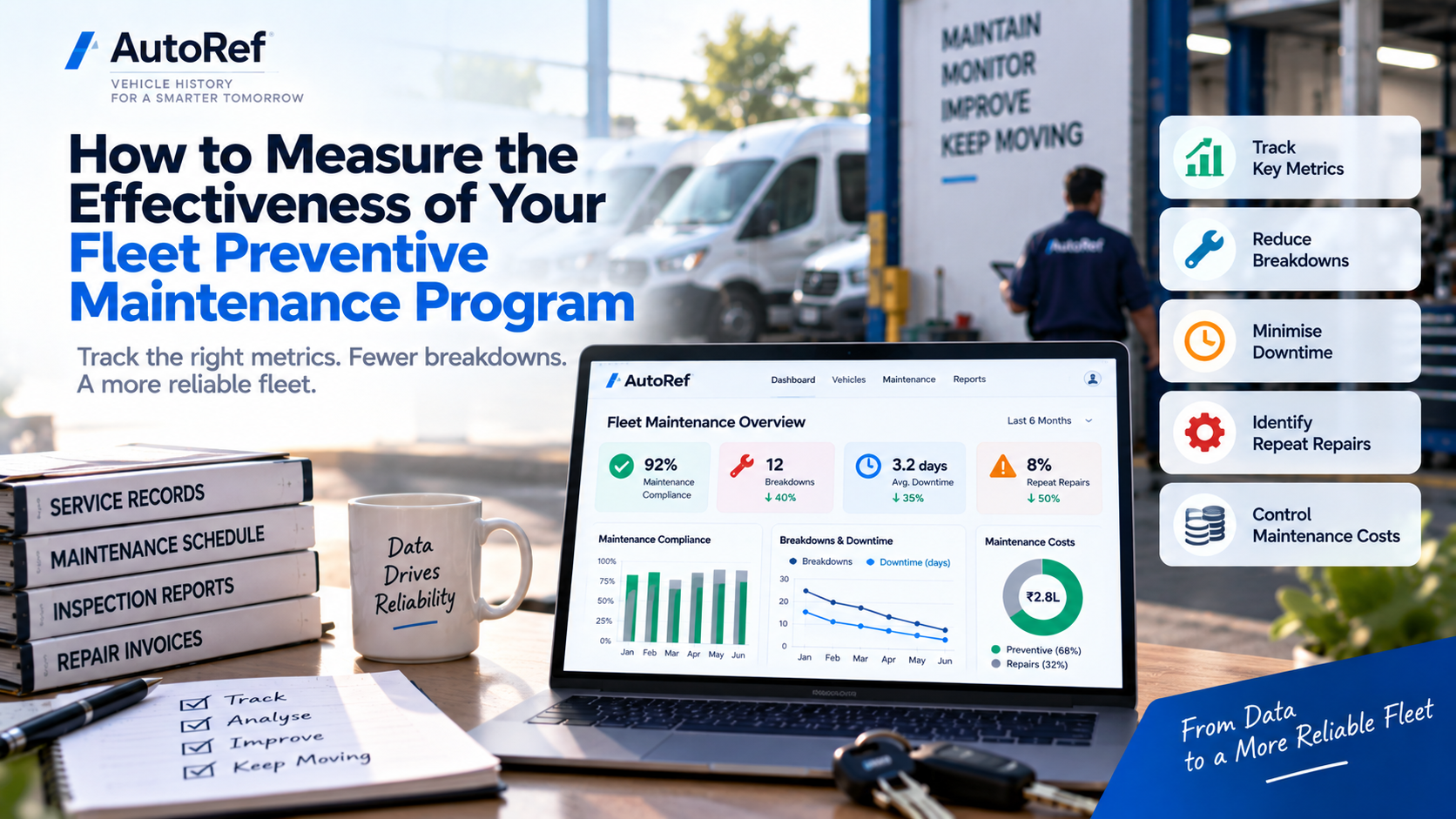 Car Maintenance & Upkeep
How to Measure the Effectiveness of Your Fleet Preventive Maintenance Program
Learn which preventive maintenance metrics help fleet managers track compliance, breakdowns, downtime, repeat repairs and maintenance costs.
 Fleet Maintenance Management
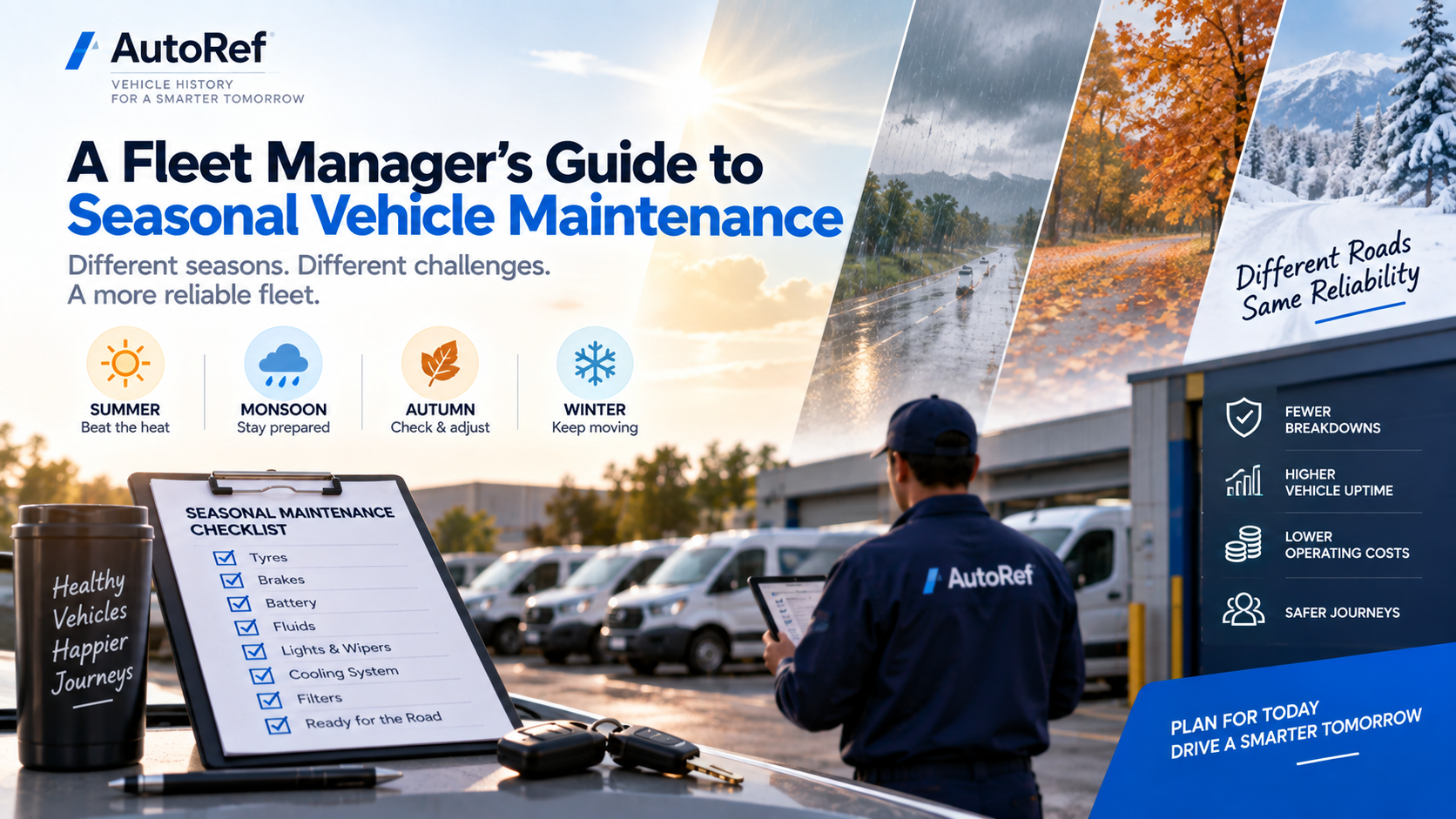
A Fleet Manager's Guide to Seasonal Vehicle Maintenance
Learn how seasonal weather, road conditions and vehicle usage affect fleet maintenance, with practical checks for tyres, brakes, batteries and fluids.
 Fleet Maintenance Management
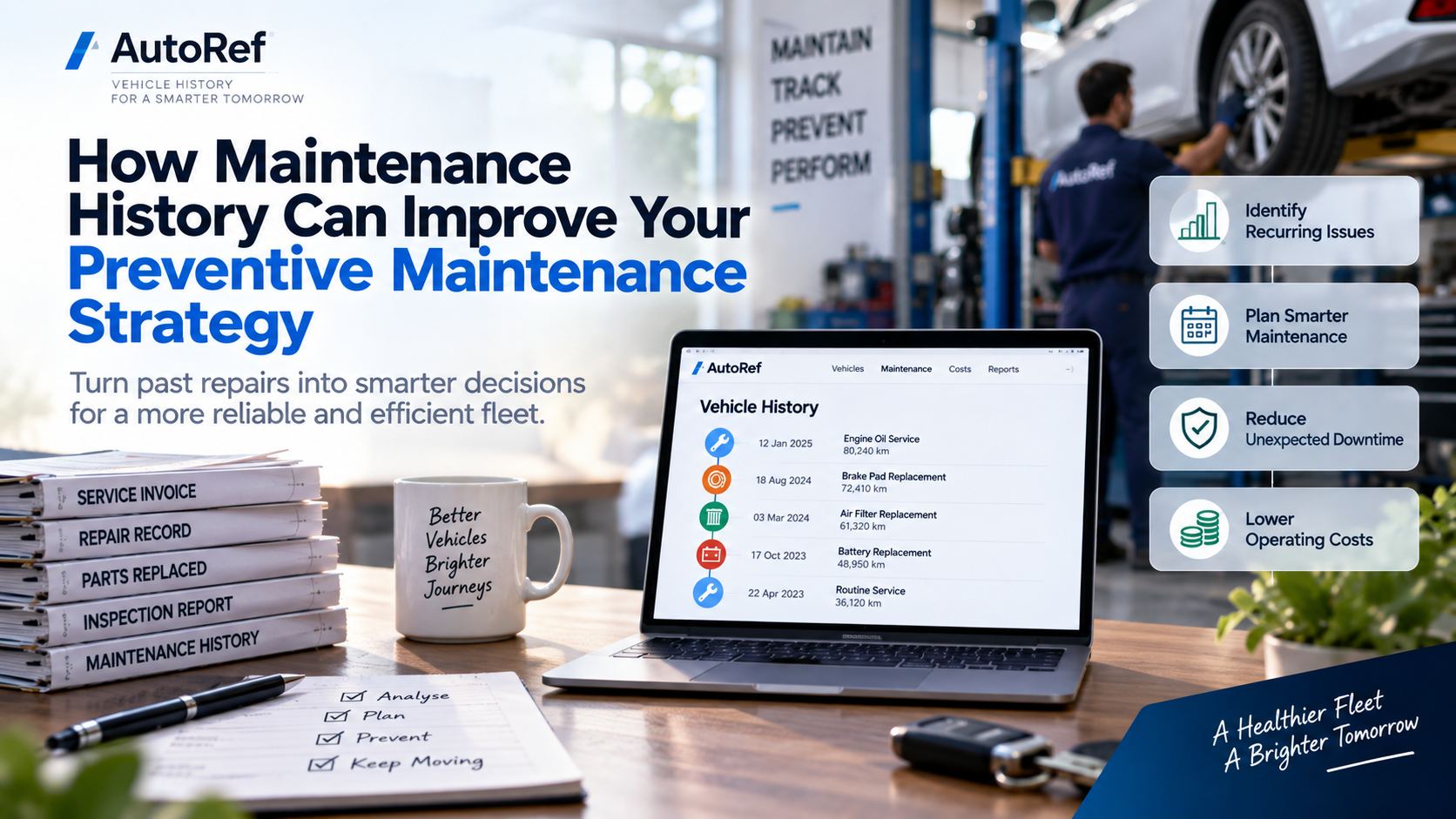
How Maintenance History Can Improve Your Preventive Maintenance Strategy
Learn how vehicle maintenance history helps identify recurring repairs, improve preventive maintenance, and make better vehicle maintenance decisions.