
Introduction
Your car insurance policy has a defined period of validity, and the date of expiry of the policy is one of the most important details to keep a track of. It is easy to forget the renewal date when a vehicle is used regularly, especially when there are several vehicles to manage.
For one privately owned car, the problem may simply be missing the renewal date. For a taxi operator with 8 cars, a hospital with multiple ambulances, or a hotel maintaining a fleet of guest vehicles, keeping track manually becomes much harder.
There are several ways to check your car insurance expiry date online.
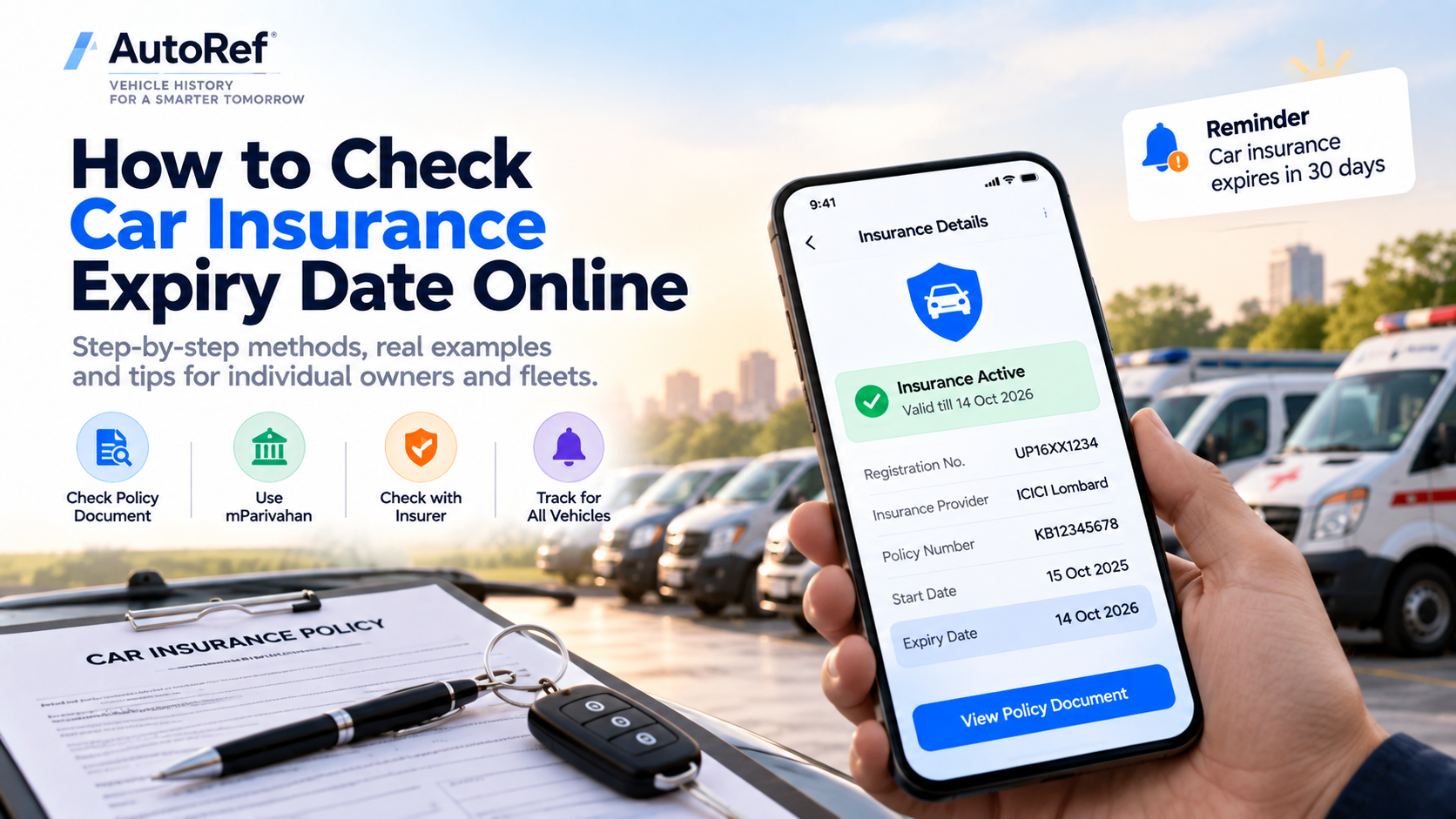
1. Check Your Insurance Policy Document
The most direct method is to look at your current insurance policy or certificate.
The document normally contains details such as:
- - Policy number
- - Vehicle registration number
- - Insurance provider
- - Policy start date
- Policy expiry date
- Insured vehicle details
For example, if your policy shows coverage from 15 October 2025 to 14 October 2026, your insurance validity ends on 14 October 2026.
Do not confuse the policy issue date with the expiry date. The expiry date is what determines when the current policy period ends.
You can also check the official insurance certificate, where the date of expiry of insurance is a specifically listed field.
2. Check Vehicle Insurance Details Through mParivahan
For vehicles registered in India, vehicle-related insurance validity is also reflected in the VAHAN ecosystem.
The Ministry of Road Transport and Highways has stated that insurance data uploaded by the Insurance Information Bureau is reflected in mParivahan, and citizens can access vehicle information using the vehicle registration number. The same source notes that insurance validity can be available through the app.
This can be useful when you do not have the policy document immediately available.
For example, suppose you are buying a used car and the seller says the vehicle has another six months of insurance remaining. Checking the recorded vehicle information provides an additional way to verify the status rather than relying only on a verbal claim.
3. Check With Your Insurance Company
Most insurers provide digital access to policy information through their website or mobile application.
Depending on the insurer, you may be able to retrieve your policy using details such as:
- - Registration number
- - Policy number
- - Mobile number
- - Customer details
This is particularly useful when you have lost the original policy document.
For example, an individual owner who purchased insurance a year ago may remember the insurer but not the exact renewal date. Logging into the insurer's portal can provide the current policy validity.
4. Why Checking the Expiry Date Is Not Enough
Knowing the expiry date once is useful. Keeping track of it is the real challenge.
Consider a small taxi fleet with 10 vehicles.
One car's insurance expires in October, another in November, two in January and several more at different times of the year. If this information is maintained only in emails, paper files or a spreadsheet, it is easy for one renewal to be missed.
The same problem appears in other operations:
Hospital ambulances: An expired insurance policy can create an administrative problem when the vehicle is urgently required.
Hotel cars: Several vehicles may have different renewal dates, making manual tracking difficult.
Transport operators: Vehicles are constantly on the road, so insurance status is one of several documents that need monitoring.
Individual car owners: The policy may renew only once a year, so it is easy to forget the exact date.
5. Keep Insurance Expiry Alongside Other Vehicle Documents
Insurance should not be tracked in isolation. A vehicle may also have other dates that need attention, such as RC-related validity, PUCC, permits or outstanding challans.
For a business operating 20 vehicles, having these dates available vehicle-by-vehicle can make compliance checks much easier.
Instead of asking:
“When does this vehicle's insurance expire?”
you can ask:
“Which vehicles have an insurance or compliance date coming up?”
That shift becomes important as the number of vehicles increases.
6. Maintain a Vehicle-Level Record
A practical system should associate the insurance information with the specific vehicle rather than keeping policy documents as unrelated files.
For example:
| Vehicle | Insurance Expiry | Other Compliance |
|---|---|---|
| UP43 XX 1234 | 14 Oct 2026 | PUC tracked |
| MH04 XX 5678 | 03 Nov 2026 | Permit tracked |
| MP11 XX 9012 | 21 Dec 2026 | PUC tracked |
This gives an owner or fleet operator a single view of upcoming dates.
AutoRef is designed around this vehicle-level approach, helping users keep vehicle records and compliance information together rather than maintaining separate manual lists.
Conclusion
Knowing your car insurance expiry date is only the first step. The more important part is making sure the date does not get overlooked when the policy is due for renewal.
For an individual car owner, checking the policy once a year may be sufficient. But when you manage several vehicles such as taxi cars, hospital ambulances, hotel vehicles or transport vehicles, each vehicle can have a different insurance expiry date. Managing these dates through paper documents, emails or spreadsheets can quickly become difficult.
A vehicle-level record makes this easier. Keeping insurance validity alongside other important vehicle information such as service history, PUC, RC and permits gives you a clearer view of what needs attention and when.
The objective is simple: know the status of every vehicle before an important document expires, rather than discovering the problem when the vehicle is already due for use or renewal.
Frequently Asked Questions
How can I find my car insurance expiry date?
Check your insurance policy document, your insurer's online account/app, or vehicle information available through official VAHAN/mParivahan services.
Can I check vehicle insurance validity online using the registration number?
Vehicle insurance validity is reflected in the VAHAN/mParivahan ecosystem, where vehicle details can be accessed using the registration number.
What happens if I forget to renew car insurance?
You risk having a vehicle without current insurance coverage and may face problems when the vehicle needs to be used, inspected or involved in an incident. Check the actual policy terms and applicable legal requirements for your situation.
How should a fleet owner track insurance expiry dates?
Maintain insurance validity against each vehicle and review upcoming expiry dates regularly. This becomes increasingly important as the number of vehicles grows.
Can I track insurance along with PUC and other vehicle documents?
Yes. Keeping insurance, PUC, RC and permit information together provides a more complete view of vehicle compliance.
Related Articles
All Vehicle Maintenance Records →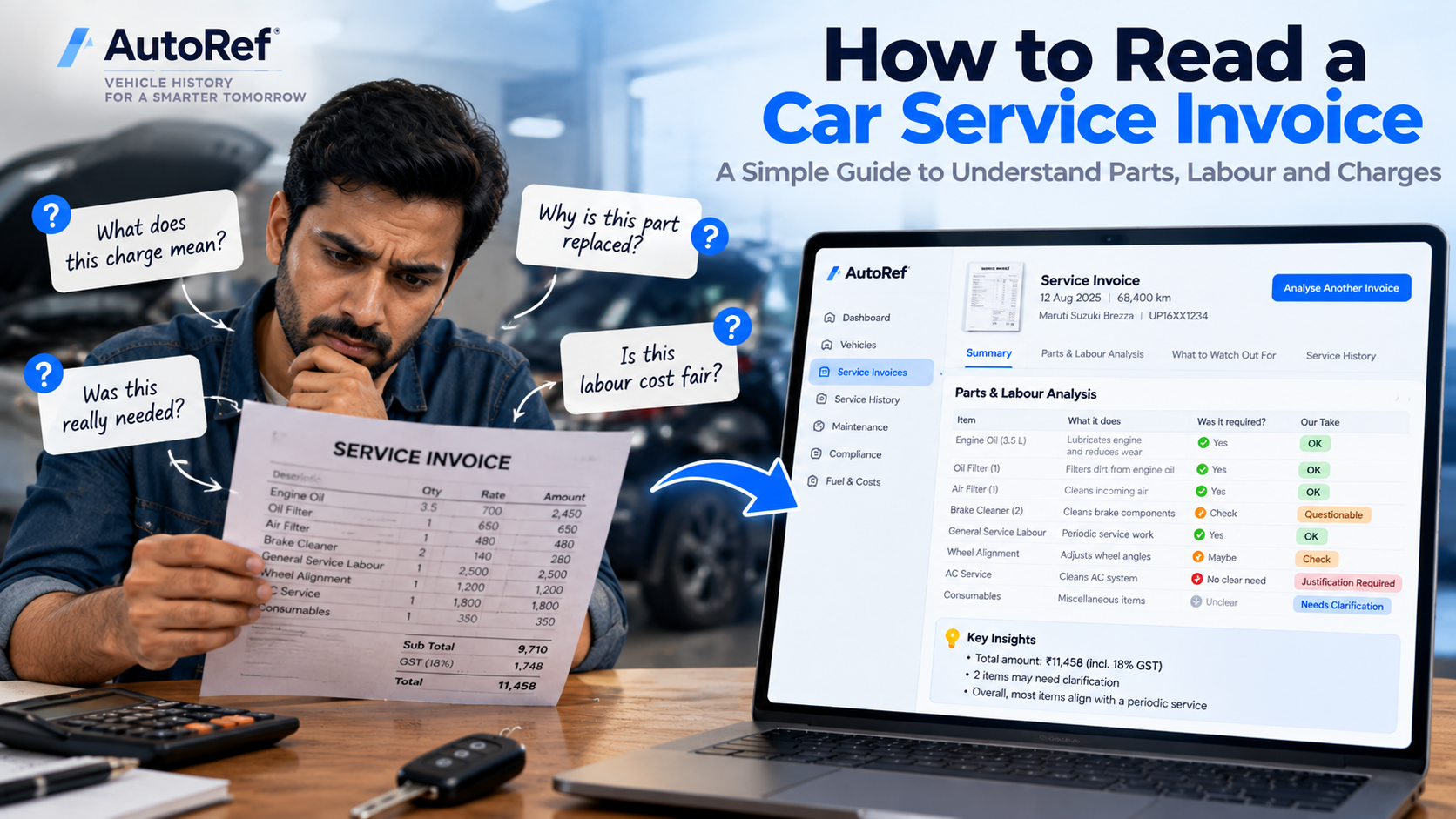 Vehicle Compliance
How to Read a Car Service Invoice: A Simple Guide
Learn how to read a car service invoice, understand parts, labour, quantities and taxes, and identify charges that may need clarification.
 Car Service & Repair
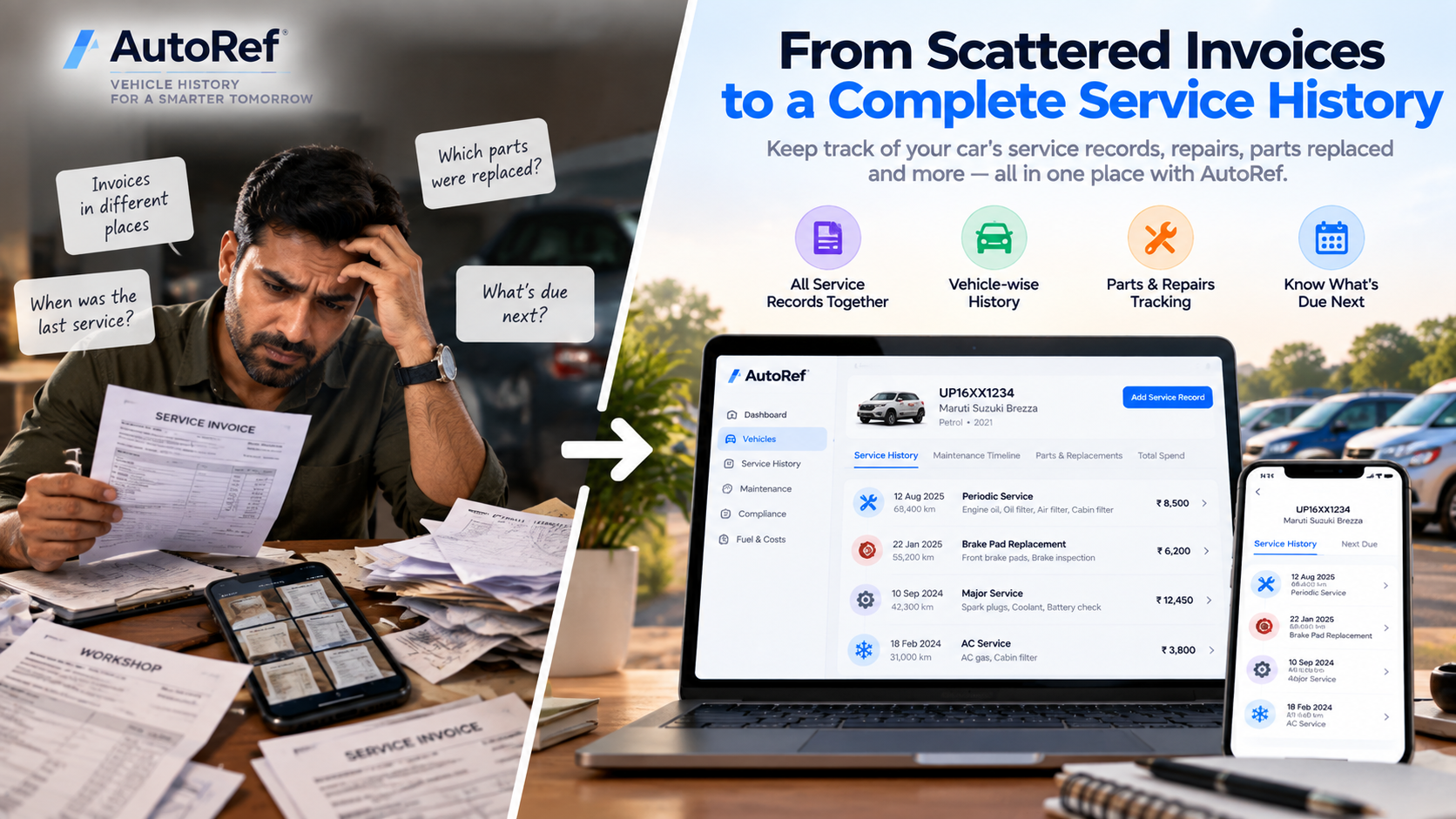
How to Keep Track of Your Car Service History
Learn what to record in your car service history, how to organize invoices, log mileage and parts, and use records to plan maintenance with confidence.
 Fleet Vehicle Downtime Management
How to Reduce Vehicle Downtime in a Fleet
Learn how to reduce fleet downtime through preventive maintenance, repair tracking, vehicle history and better prioritization of maintenance.